Samsung Galaxy Z Fold 8 Ultra Preview: Everything You Need to Know

SammyGuru is reader-supported. We have affiliate and sponsored partnerships, so we may earn a commission when you buy through links on our site — at no extra cost to you. Learn more.
In this article
- Expected specs
- Galaxy Z Fold 8 Ultra vs Galaxy Z Fold 7
- Preorder & Mystery Box offer
- Galaxy Z Fold 8 Ultra rumors & leaks
- Frequently asked questions
- Design and Hardware
- Smaller punch-hole camera on the front
- Displays
- No S Pen or Privacy Display
- Performance (Key specs)
- Cameras
- Software
- Battery and Charging
- Colors, Launch and Pricing
Samsung's most important foldable in years: 200MP cameras, a 5,000mAh battery, and deep Gemini AI.
The Galaxy Z Fold 8 Ultra may be Samsung's most important foldable in years. With Chinese rivals shipping thinner foldables that pack bigger batteries and near-invisible creases, Samsung is refining the Fold formula while making real moves where it counts: a 200MP-led camera system, a larger 5,000mAh battery with 45W charging, a brighter and less-creased main display, and deep Gemini AI. Here's everything we know so far from the leaks.
Expected specs
| Main display | 8.0" LTPO OLED, "significantly enhanced" resolution, up to 3,600 nits |
|---|---|
| Cover display | 6.5" LTPO OLED, FHD+, HDR10+, 1-120Hz |
| Processor | Snapdragon 8 Elite Gen 5 for Galaxy |
| RAM | 12GB / 16GB LPDDR5X |
| Storage | 256GB / 512GB / 1TB (UFS 4.1) |
| Rear cameras | 200MP main (OIS) + 50MP ultrawide + 10MP 3x telephoto |
| Selfie cameras | 10MP cover + 10MP inner |
| Battery | 5,000mAh |
| Charging | 45W wired, 20-25W wireless (Qi2.2), 4.5W reverse |
| Software | Android 17, One UI 9, up to 7 years of updates |
| Durability | Aluminum frame, Gorilla Glass Victus 2, IP48 |
| Dimensions & weight | 4.1mm unfolded, 215g |
| S Pen | Not supported |
| Expected launch | July 22, 2026 (Galaxy Unpacked) |
Galaxy Z Fold 8 Ultra vs Galaxy Z Fold 7
| Spec | Galaxy Z Fold 8 Ultra | Galaxy Z Fold 7 |
|---|---|---|
| Unfolded thickness | 4.1mm | 4.2mm |
| Peak brightness | 3,600 nits | 2,600 nits |
| Ultrawide camera | 50MP | 12MP |
| Battery | 5,000mAh | 4,400mAh |
| Wired charging | 45W | 25W |
| Wireless charging | 20-25W (Qi2.2) | 15W |
Preorder & Mystery Box offer
The Galaxy Z Fold 8 Ultra isn't on sale yet. Preorder through our link at launch and we'll ship you a free SammyGuru Mystery Box of accessories — sign up now to lock in your spot.
Get the Mystery Box →Galaxy Z Fold 8 Ultra rumors & leaks

Frequently asked questions
For the past few years, Samsung’s foldable strategy has felt predictable. Every summer, the company launches new Fold and Flip models, improving a few things. It mostly makes the devices a little thinner and lighter, and moves on. The formula has worked well enough to keep Samsung ahead in the foldable market, but competitors have started catching up quickly.
Chinese brands are now building thinner foldables with larger batteries and almost invisible creases. That is why the Galaxy Z Fold 8 Ultra may end up becoming Samsung’s most important foldable phone in years. Based on current leaks and reports, Samsung will continue refining the same Fold design again, while also making big moves in key areas. Here’s everything you need to know about the Fold 8 Ultra.
Disclaimer: This article is based entirely on leaks, rumors, industry reports, and unofficial information surrounding the Galaxy Z Fold 8 Ultra. Since Samsung has not officially confirmed these details, specifications, features, pricing, and launch plans may change over time. We will regularly update this article to reflect the latest reports and developments as they emerge.
Design and Hardware
Normally, this device should have been called the Galaxy Z Fold 8. After all, it succeeds last year’s Fold 7. However, Samsung has different plans this year. The Fold 8 is its branding for the all-new “wide” foldable it is launching alongside the rest of the lineup. As such, the main book-style foldable has been rebranded to the Galaxy Z Fold 8 Ultra.
Samsung already made huge strides with the Galaxy Z Fold 7 by significantly reducing its thickness and weight. The Fold 8 Ultra may not deliver another dramatic leap in those areas. The company appears to be focusing on refinement rather than radical redesign.

Current leaks suggest the Galaxy Z Fold 8 Ultra could measure around 4.1mm when unfolded and weigh 215 grams. That would make it slightly thinner than the Fold 7 (4.2mm), but the weight remains unchanged, potentially because Samsung is prioritizing a larger battery this time around (more on this later). You can see the full dimensions and weight below (compared with Fold 7 and Fold 6).
| Folded dimensions | Unfolded dimensions | Weight | |
| Galaxy Z Fold 8 Ultra | 158.4 x 72.8 x 9mm | 158.4 x 143.2 x 4.1mm | 215 grams |
| Galaxy Z Fold 7 | 158.4 x 72.8 x 8.9mm | 158.4 x 143.2 x 4.2mm | 215 grams |
| Galaxy Z Fold 6 | 153.5 x 68.1 x 12.1mm | 153.5 x 132.6 x 5.6mm | 239 grams |
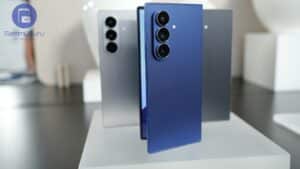
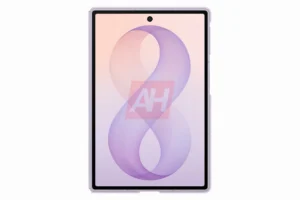
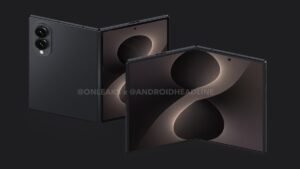
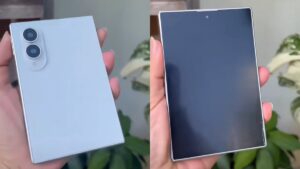
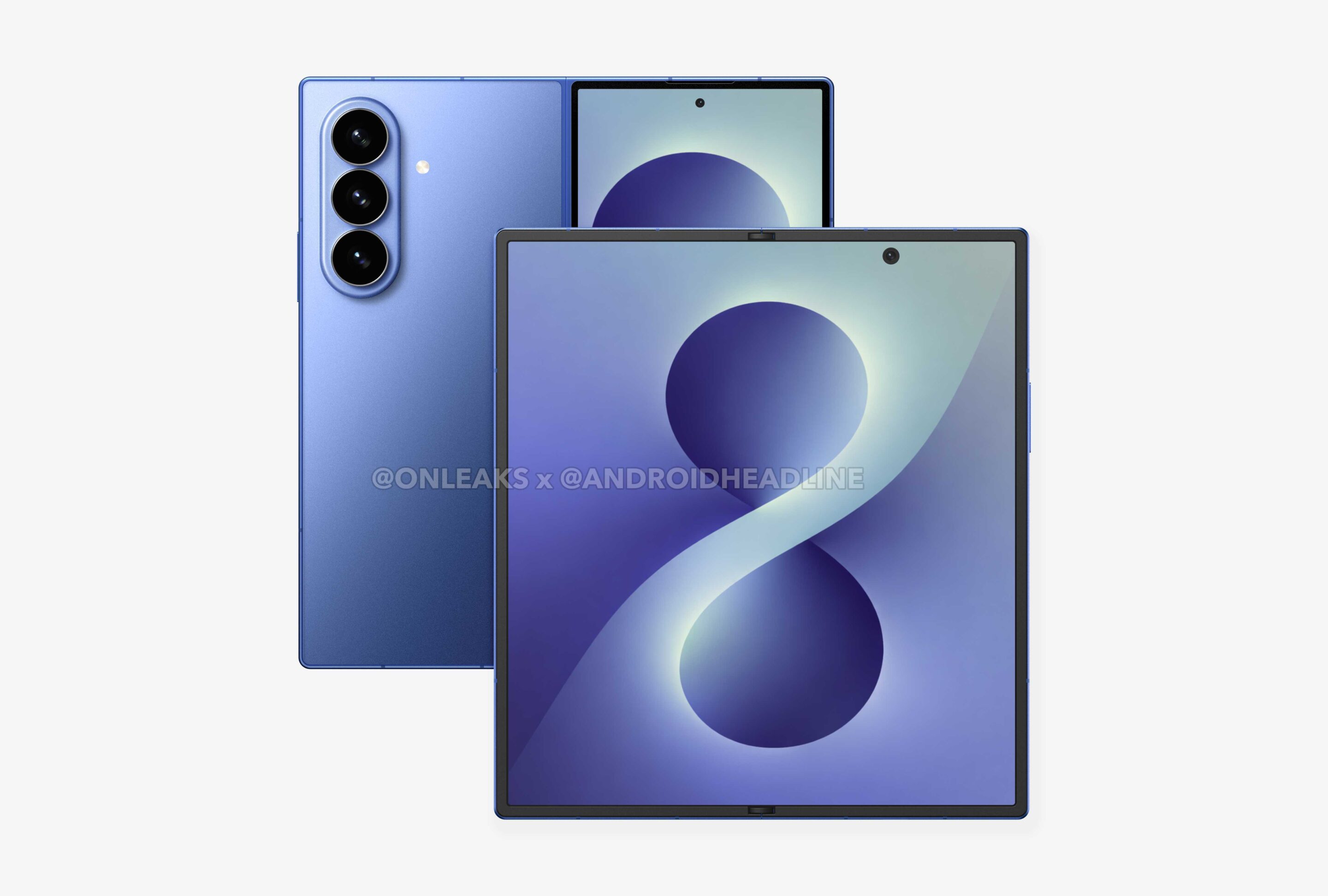
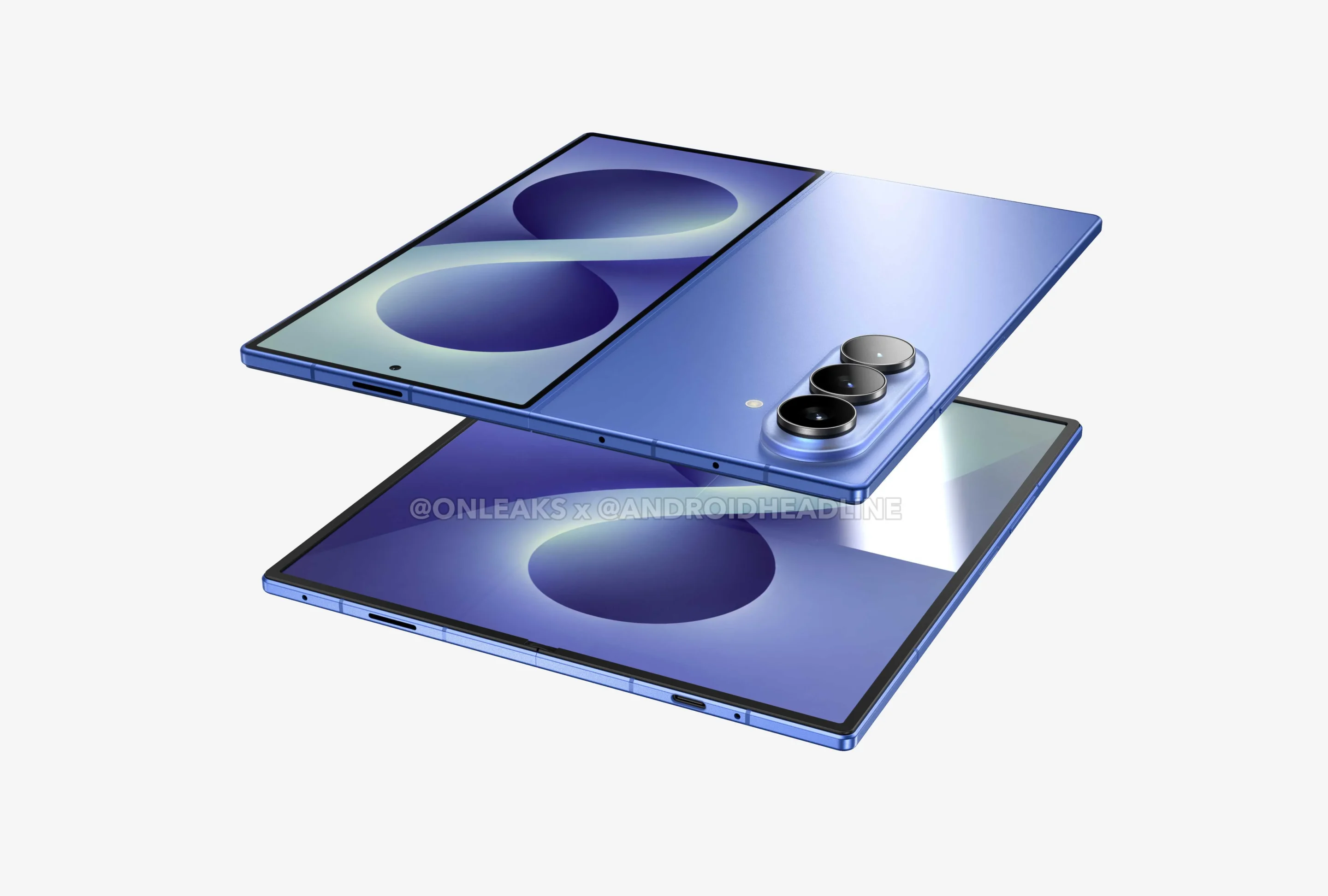
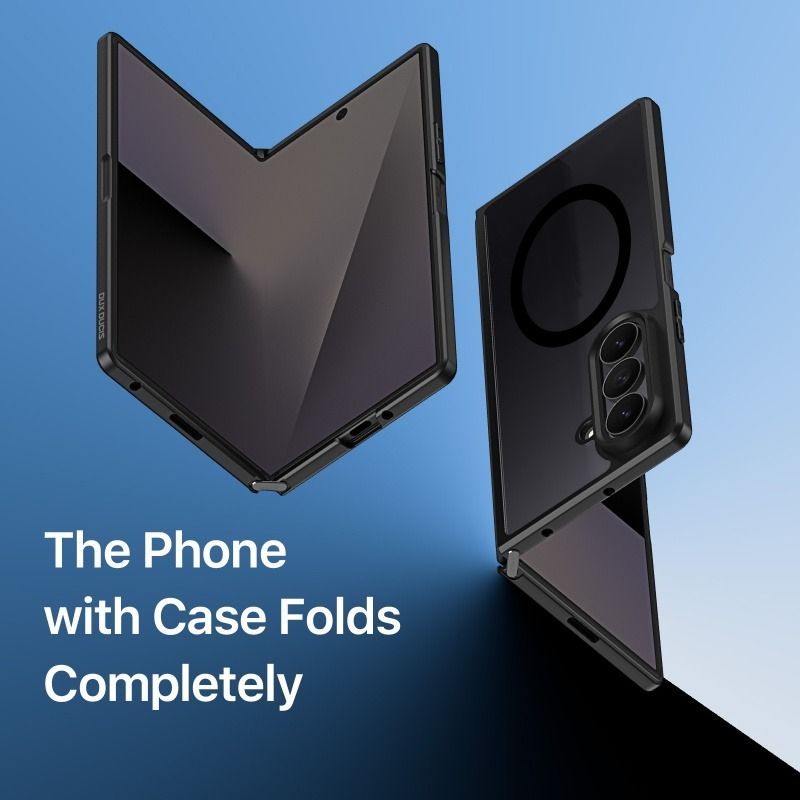
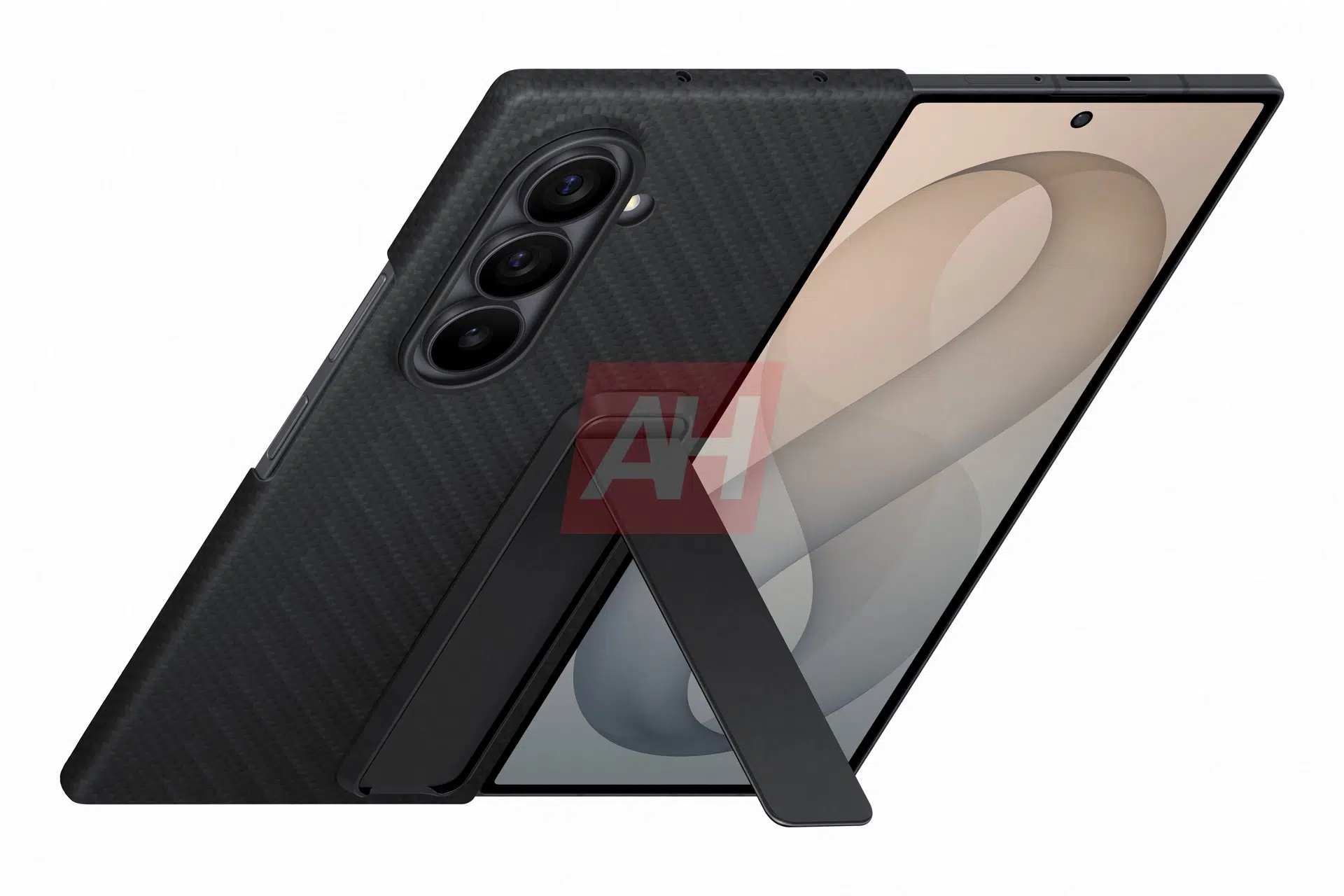
Considering these dimensions, the Fold 8 Ultra may look almost identical to its predecessor at first glance. Samsung is keeping the same general form factor, with leaked renders confirming a familiar vertically aligned rear camera setup housed inside a pill-shaped camera island. The camera island protrudes noticeably from the back panel. As a result, the Fold 8 will likely continue to wobble when placed flat on a table.
Smaller punch-hole camera on the front
Both selfie cameras feature a punch-hole design, as the company has already moved on from the under-display camera technology. The cover screen selfie camera may feature a slightly smaller hole than the one on the Fold 7. The bezels around the two displays remain thin and symmetrical, with the inner panel continuing to feature slightly raised edges for added protection while folding.
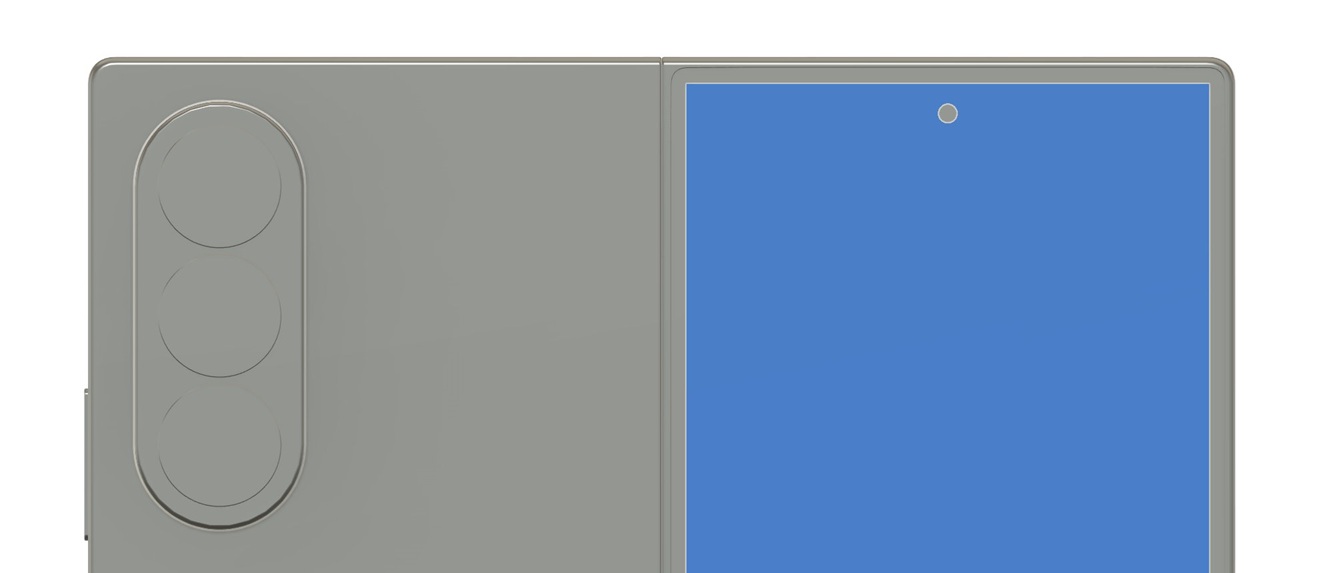
Samsung is also expected to retain the flat aluminum frame design introduced with recent Fold models. The power button doubles as a fingerprint scanner (Samsung foldables aren’t moving to under-display fingerprint scanners yet). The Fold 8 Ultra could feature an aluminum frame, Gorilla Glass Victus 2 protection on the cover screen, and an IP48 rating for dust and water resistance.
Displays
For the past several years, Samsung has been trying to reduce the visible crease on its foldable screens. Early rumors about the Galaxy Z Fold 8 Ultra were incredibly ambitious, claiming the device could come with a nearly invisible crease. Samsung Display even showcased a nearly crease-free foldable panel during CES 2026, giving us an early glimpse at the technology the Fold 8 could adopt.

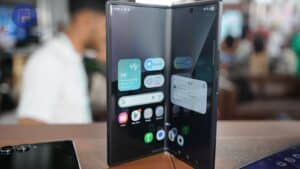
While we still do not have a clear picture, the Fold 8 Ultra may deliver noticeable improvements. The crease may not disappear entirely, but expect it to be less visible. Much of this may come from Samsung’s new hinge system and a more advanced OLED panel structure. Reports also suggest the device may use dual-layer ultra-thin glass (UTG) on the main display to improve durability while making the crease less noticeable.
As far as the screen sizes are concerned, leaks have hinted at a few notable upgrades over the 2025 model. The Galaxy Z Fold 8 Ultra is rumored to feature an 8-inch foldable LTPO OLED panel on the inside, with a “significantly enhanced” screen resolution. It isn’t immediately clear what this means, though. The Fold 7 offers a QHD+ screen resolution, HDR10+, and a 1Hz to 120Hz dynamic refresh rate.
The cover screen on the Galaxy Z Fold 8 Ultra could be a 6.5-inch LTPO OLED panel with Full HD+ resolution, HDR10+, and the same adaptive refresh rate range. Or maybe Samsung has planned upgrades on the outside as well.
Meanwhile, recent reports suggest the internal folding display could boast a peak brightness of 3,600 nits, up from the Fold 7’s 2,600 nits. It’s unclear if the cover screen gets the same upgrade.
No S Pen or Privacy Display
Despite some early rumors, S Pen support may once again remain missing. Samsung removed the digitizer layer required for stylus input to make foldables thinner and lighter, and the company isn’t putting it back on the Galaxy Z Fold 8 Ultra.
The new foldable may also miss out on Samsung’s Privacy Display, which offers built-in protection by blocking side-angle views on the screen. This feature currently remains exclusive to the Galaxy S26 Ultra.
Performance (Key specs)
Performance is unlikely to be an issue on the Galaxy Z Fold 8 Ultra. Samsung should power the phone with Qualcomm’s Snapdragon 8 Elite Gen 5 for Galaxy. It’s the same overclocked version found on the S26 Ultra. As usual, Samsung will likely pair the processor with fast LPDDR5X RAM, with 12GB and 16GB memory configurations. Storage options may include 256GB, 512GB, and 1TB variants, potentially using newer UFS 4.1 storage.
The new chipset is expected to deliver major improvements across the board, particularly in AI processing, gaming performance, thermal efficiency, and battery optimization. Qualcomm has heavily focused on on-device AI this generation, which fits perfectly with Samsung’s growing AI ambitions.
In fact, leaks suggest Samsung could make AI one of the biggest selling points of the Fold 8 Ultra. The company is reportedly working closely with Google on next-generation Gemini AI experiences, and the Ultra foldable may become one of the first Galaxy devices deeply optimized for the upcoming “Gemini Intelligence” platform.
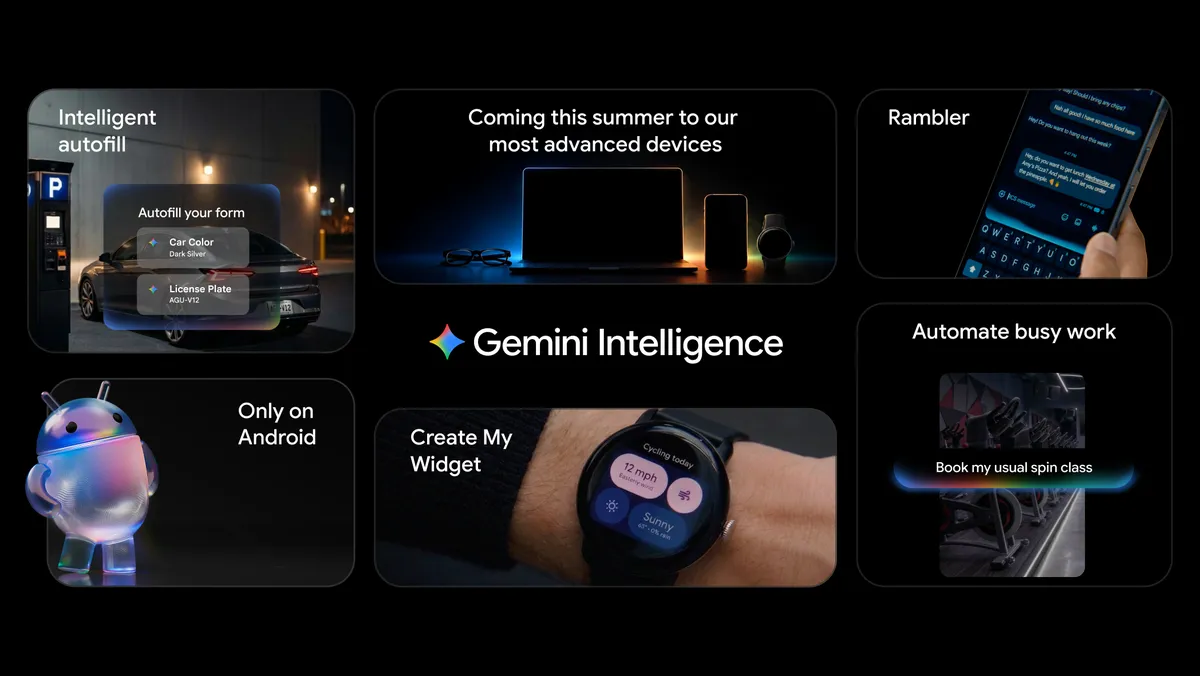
With its large foldable display and multitasking-focused software, the phone could act as a showcase device for advanced on-device AI features, contextual assistance, live productivity tools, and smarter multitasking experiences. Samsung has been teasing advanced AI capabilities for its next-gen foldables, though it hasn’t revealed additional details.
Beyond raw performance, the Fold 8 Ultra is expected to remain fully loaded in terms of connectivity and multimedia features. Rumors point to support for 5G, Wi-Fi 7, Bluetooth 6.0, Ultra Wideband (UWB), NFC, and GPS. Stereo speakers with Dolby Atmos support should round out the package, continuing Samsung’s tradition of delivering one of the best multimedia experiences on a foldable phone.
Cameras
Samsung’s foldable phones have traditionally fallen a bit behind the company’s Ultra flagships when it comes to camera hardware. The Galaxy Z Fold 8 Ultra could finally start closing that gap. Leaks suggest Samsung is preparing a much more capable camera system for its next Fold, potentially making it the most photography-focused foldable the company has ever released.
The phone is rumored to feature a 200MP primary camera with optical image stabilization, alongside a 50MP ultrawide sensor and a 10MP telephoto camera offering 3x optical zoom. Samsung may also equip both the cover display and inner foldable display with 10MP selfie cameras.
The ultrawide upgrade is particularly interesting. According to reports, Samsung could borrow the same 50MP ultrawide sensor used in the Galaxy S26 Ultra, which would represent a major leap over previous Fold generations. Ultrawide cameras have often been one of the weaker areas on Samsung foldables, so this change alone could noticeably improve overall image quality.
All cameras are expected to support 4K video recording at 60fps with HDR10+ and Super HDR support. Meanwhile, the primary and ultrawide cameras could also record in 8K at 30fps, bringing the Fold lineup much closer to Samsung’s top-tier Ultra phones in terms of professional-grade video features. The Fold 8 Ultra may finally reach a point where buyers no longer feel like they are sacrificing flagship-level photography.
Software
Software will likely play an even bigger role on the Galaxy Z Fold 8 Ultra than the hardware itself. The device is almost certain to launch with Android 17-based One UI 9 out of the box. This update continues to focus on AI-powered experiences, smarter multitasking tools, smoother animations, and improved visual polish throughout the interface.
Samsung has also refined widget customization, system transitions, and large-screen app behavior to better take advantage of foldable displays. Foldables naturally benefit more from advanced multitasking than traditional smartphones. The Galaxy Z Fold 8 Ultra may also alert you when the device doesn’t fold properly. You can read more about One UI 9 here.
Android 17 itself is introducing several changes specifically designed for large-screen and foldable devices, including a dedicated gaming mode where you get controls separated from the main gameplay. That means the Galaxy Z Fold 8 Ultra could offer even better split-screen functionality, improved app continuity, smarter drag-and-drop behavior, and more optimized tablet-style experiences across the system.
In addition to the Galaxy AI features Samsung introduced with the Galaxy S26 series, the Fold 8 Ultra may debut even more advanced AI-driven tools powered by deeper integration with Google’s Gemini platform. The combination of a large foldable display and AI-enhanced productivity features could make the device particularly useful for multitasking, content creation, note-taking, and workflow automation.
Samsung is also expected to continue its strong software support policy. The Galaxy Z Fold 8 Ultra will likely receive up to seven years of Android OS and security updates, ensuring long-term support well into the next decade.
Battery and Charging
According to current leaks, Samsung may finally address one of the Fold lineup’s most persistent weaknesses this year. It could equip the Galaxy Z Fold 8 Ultra with a much larger 5,000mAh battery. That would represent a substantial jump over the Fold 7’s 4,400mAh cell.
Charging speeds may also improve. The Fold 8 Ultra is rumored to support 45W wired charging alongside 20W or 25W wireless charging based on the newer Qi2.2 standard. It may retain 4.5W reverse wireless charging as well. While Samsung still may not match some Chinese competitors in raw charging speed, the combination of a larger battery and more efficient hardware could still result in a major real-world improvement.
To recall, the Fold 7 tops out at 25W wired and 15W wireless charging. If the current rumors hold, battery life and charging speed could end up being one of the biggest upgrades on the Galaxy Z Fold 8 Ultra.
Colors, Launch and Pricing
Samsung may officially unveil the Galaxy Z Fold 8 Ultra in late July 2026 during its next Galaxy Unpacked event. Several reports point to July 22 as the most likely announcement date, though Samsung has not confirmed anything yet. If the company follows its usual launch strategy, pre-orders would likely begin immediately after the event, with global sales starting in early or mid-August (possibly August 7).
Color options may include Cream, Graphite, Green Shadow, and Violet Shadow. At least leaks so far have mentioned these shades, but it’s unclear if that’s all. Samsung typically launches flagship phones in some exclusive colors through its website. It remains to be seen if the Fold 8 Ultra will get more options.
Pricing, however, could become a concern. Reports suggest Samsung is facing rising component costs across several key areas, including foldable OLED panels, memory chips, processors, advanced camera hardware, and batteries. Those increasing production costs may put pressure on the company to raise Fold 8 Ultra prices compared to previous generations.
At the same time, Samsung is also entering what could become a much more competitive foldable market in 2026. Apple is gearing up to launch its first foldable iPhone later this year. As such, Samsung may not want to push prices too aggressively if it hopes to maintain its dominance in the premium foldable segment.
Because of that, some reports suggest the Korean giant could ultimately keep pricing close to the Galaxy Z Fold 7 despite the more expensive hardware. Current expectations point to a starting price of around $2,099 for the base 256GB variant, and $2,399 and $2,799 for the 512GB and 1TB model.
As always, Samsung should offer generous pre-order bonuses, trade-in discounts, free storage upgrades, and bundle offers to make the pricing slightly easier to swallow during the launch period.
If you are considering buying the Galaxy Z Fold 8 Ultra, our Mystery Box program is for you. We offer free accessories, including a case and a charger, with every eligible pre-order in the US. Sign up here and wait for the official launch in a few weeks.

Written by
Sumit AdhikariSumit, a life-long Samsung user, is passionate about technology and has been professionally writing on tech since 2017. He’s a mathematics graduate by education and enjoys teaching basic mathematics tricks to school kids in his spare time. Sumit believes in artificial intelligence and dreams of a fully open, intelligent and connected world.

Follow us on Google Discover & set us as a preferred source in Google News
Share this Post
___________________________


New Blog Posts
___________________________
Exclusive: Here’s Your First Look at the Galaxy Watch 9 and Galaxy Watch Ultra 2 Watch Faces
Five new faces
Google Wallet Finally Fixes One of Its Most Annoying Wear OS Quirks
Finally, one can manage all of my receipts from both devices
Samsung Quietly Listed a New Entry Level 990 PCIe 4.0 SSD
It drops DRAM for HMB