New Samsung Display Integrates Heart Rate, Blood Pressure and Privacy Protection
SammyGuru is reader-supported. We have affiliate and sponsored partnerships, so we may earn a commission when you buy through links on our site — at no extra cost to you. Learn more.
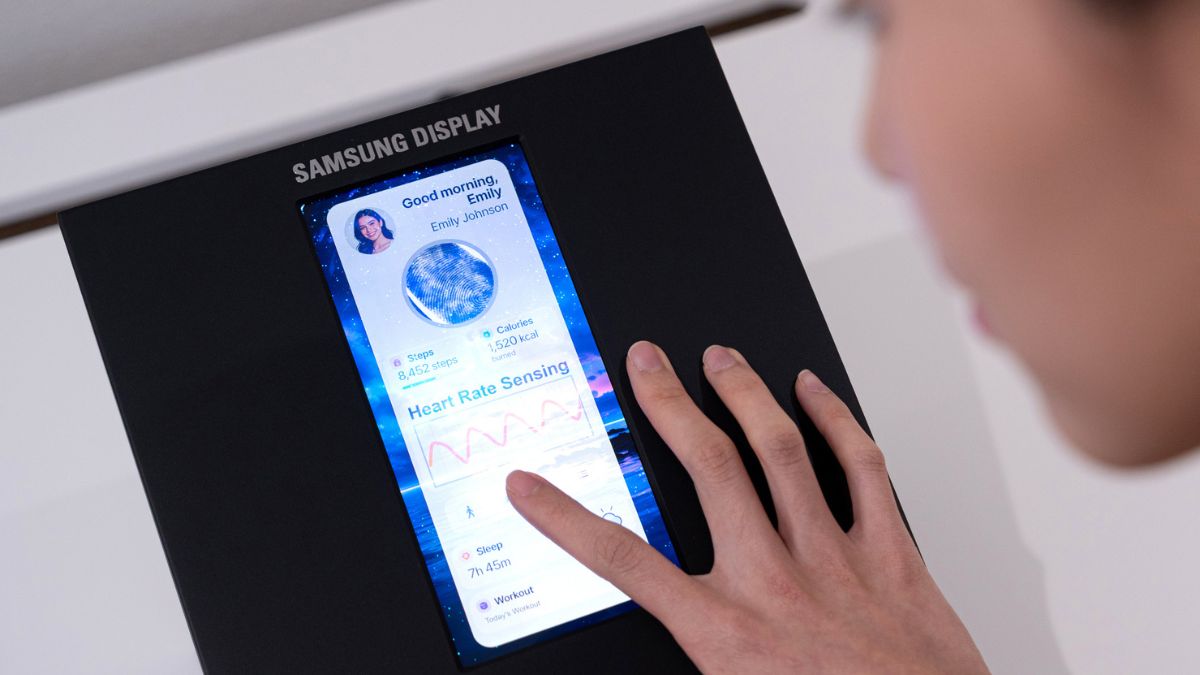
Samsung has unveiled a new smartphone screen called the Sensor OLED Display. The panel combines built-in health-tracking features with privacy protection. It is being showcased at Display Week 2026, an ongoing event hosted by the Society for Information Display (SID). This new development suggests smartphone screens may evolve further in the future.
Samsung pushes display technology forward with Sensor OLED
Samsung has developed a Sensor OLED Display that integrates OLED elements and Organic Photodiodes (OPD). The panel adopts a co-deposition process to measure various health-related biometric information, such as heart rate and blood pressure. It uses light emitted from the display to detect blood flow.
In addition, the Sensor OLED Display has incorporated Flex Magic Pixel, Samsung’s proprietary privacy protection technology. This setup offers a clever way to protect on-screen information. Instead of making the display completely dark from side angles, as in a traditional privacy display, the new method hides only key information, keeping the original background content visible. We have already seen its implementation on the Galaxy S26 Ultra.
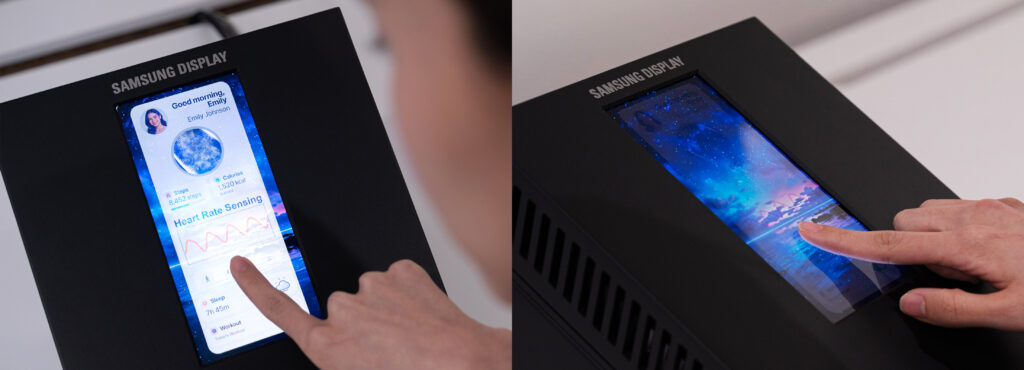
Samsung is focusing on making the Sensor OLED Display suitable for smartphone use. The panel measures 6.8 inches, similar to many flagship phones. As such, OEMs will be able to adopt it in future phones without big changes. The best thing is that it reaches 500 pixels per inch (PPI), meaning the sensing layer does not degrade image quality.
It is worth mentioning that last year, Samsung also showcased a version of the Sensor OLED. It had a resolution of around 374 PPI. However, the new Sensor OLED Display now offers a 33% improvement compared to the previous version.
“Sensor OLED Display is structurally challenging to achieve high resolution, as RGB pixels and OPD pixels must be arranged within a single layer. Samsung Display was able to realize 500 PPI resolution through advanced panel design and precise process control technologies,” said a Samsung Display official.

Written by
Binay KonwarBinay Konwar started his blogging journey in 2014 and has since written plenty of tech articles. At present, he is working as a News Writer at SammyGuru, covering everything about Samsung. He holds a Master's degree in Mathematics, but his real passion lies in tech and writing. In his free time, he enjoys playing chess and watching movies.

Follow us on Google Discover & set us as a preferred source in Google News
Share this Post
___________________________


New Blog Posts
___________________________
How Galaxy Z Fold 8’s App Screen Zoom Feature Works
You can set different zoom levels for individual apps
We Tracked Galaxy Z Fold 8 Ultra Leaks for Months: Here’s What Samsung Shipped and What it Didn’t
Galaxy Z Fold 8 Ultra is Samsung’s biggest Fold upgrade in years
Samsung Chairman Heads to Google’s Exclusive Camp for AI Discussions
AI may be a key topic of discussion