Samsung’s 40,000-nit XR Display Shines at AWE USA
SammyGuru is reader-supported. We have affiliate and sponsored partnerships, so we may earn a commission when you buy through links on our site — at no extra cost to you. Learn more.
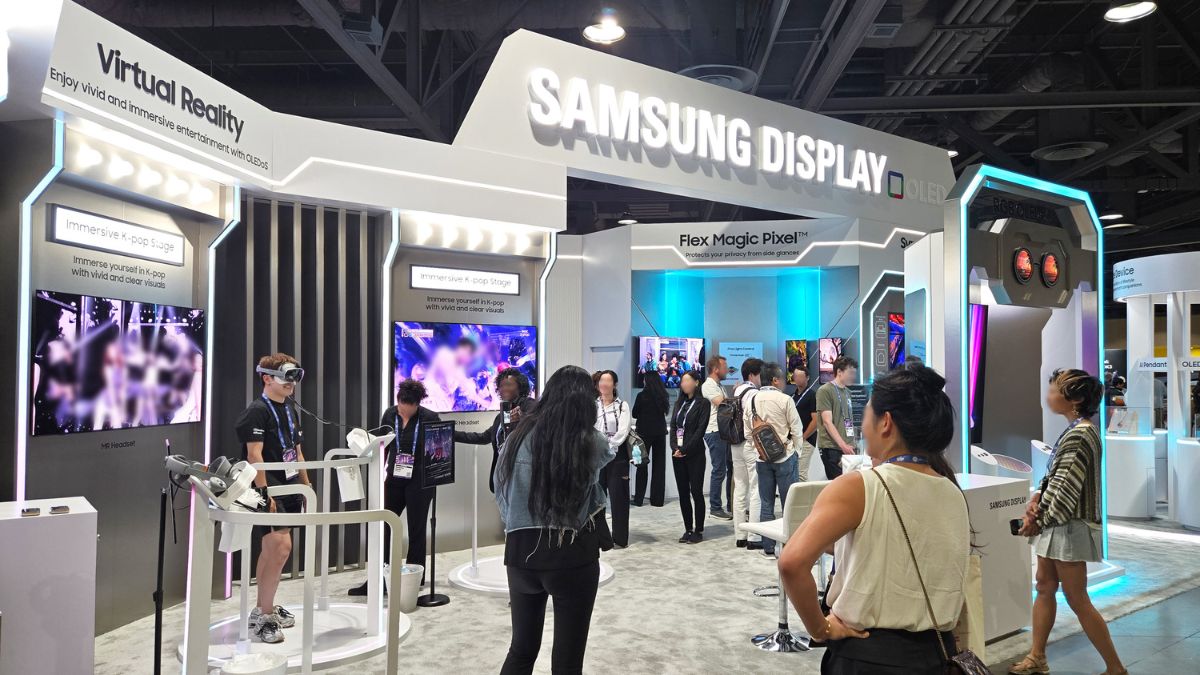
Samsung offers several display solutions for next-gen extended reality (XR) products. The company is now showcasing its latest technology at AWE USA 2026, the world’s largest XR-focused exhibition (June 16 to 18). Its 40,000-nit RGB OLEDoS, designed for mixed reality (MR) headsets and augmented reality (AR) smart glasses, is grabbing the attention.
Samsung uses Big Dipper constellation to spotlight 40,000-nit display
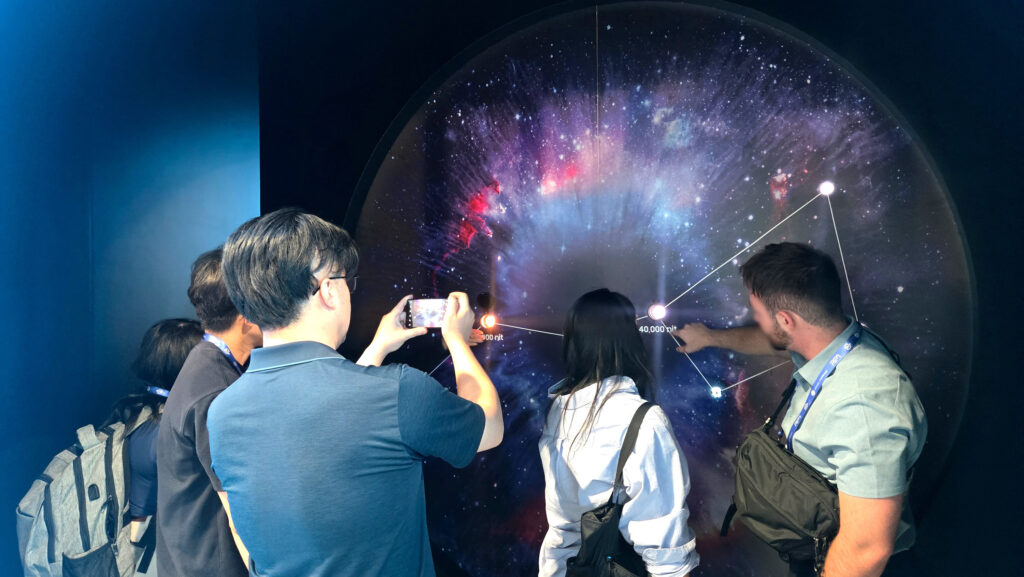
Samsung has returned to AWE USA for the second consecutive year to present its latest RGB OLEDoS technology. The company has created a dark-room exhibition space called “The Big Dipper” to show the capabilities of its 40,000-nit RGB OLEDoS .
Samsung recreated the Big Dipper constellation using seven display panels in a dark-room exhibit. Two of the panels feature its 1.3-inch, 40,000-nit RGB OLEDoS display. As a result, visitors can see the display’s outstanding color reproduction, sharp details, and ultra-high brightness.
At the expo, Samsung has presented a prototype AR smart glasses device with a 0.62-inch RGB OLEDoS display. In the “Connected Vision” zone, visitors can view real-time translation, navigation, and weather updates overlaid on a large-screen backdrop featuring the Long Beach coastline.
Furthermore, the company has presented an RGB OLEDoS-powered MR headset (prototype). In the “MR Experience” zone, visitors can watch immersive K-pop performances or play the rhythm-action game Synth Riders.
Samsung sees RGB OLEDoS as a core technology for the smart glasses market. The technology offers a simpler panel structure that can help ease the complexity of optical systems in wearable devices. Apart from XR displays, the company is showcasing a bunch of next-gen concepts. This includes a stretchable display that dynamically changes shape while remaining flat in its normal state.
“Unlike white OLEDoS, RGB OLEDoS does not require a color filter, enabling higher light efficiency and longer lifespan. These advantages make it highly suitable for delivering excellent color reproduction and high brightness,” said a Samsung Display representative. “This is why RGB OLEDoS is considered an optimal solution for XR devices, which require sharp image quality in compact and lightweight form factors.”

Written by
Binay KonwarBinay Konwar started his blogging journey in 2014 and has since written plenty of tech articles. At present, he is working as a News Writer at SammyGuru, covering everything about Samsung. He holds a Master's degree in Mathematics, but his real passion lies in tech and writing. In his free time, he enjoys playing chess and watching movies.

Follow us on Google Discover & set us as a preferred source in Google News
Share this Post
___________________________


New Blog Posts
___________________________
Samsung Galaxy Weekly Updates Roundup (June 15-21)
Samsung released the June 2026 update for 30+ devices this week
Galaxy Watch 9 and Watch Ultra 2 Leak With New Watch Faces
Exciting new info on Samsung’s upcoming wearables!
Galaxy S26 FE Korean Variant Spotted on Geekbench with Slightly Lower Scores
Samsung will likely unveil the device this fall