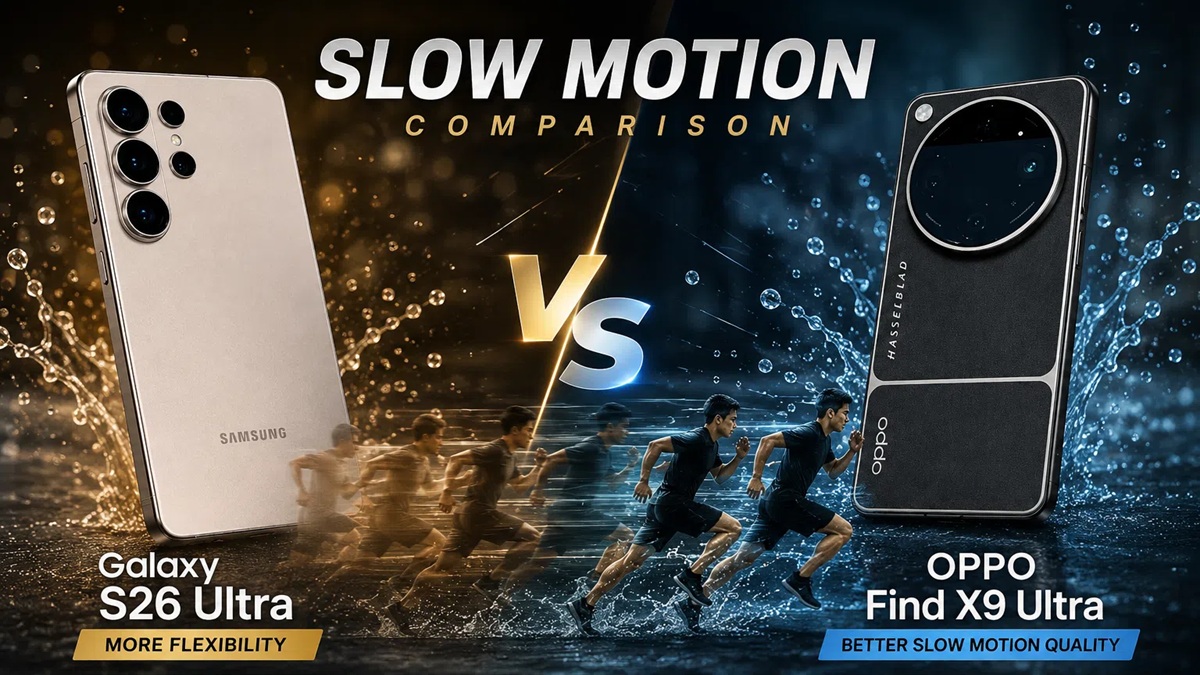
Galaxy S26 Ultra vs OPPO Find X9 Ultra Slow Motion Comparison: Hardware Makes a Difference
SammyGuru is reader-supported. We have affiliate and sponsored partnerships, so we may earn a commission when you buy through links on our site — at no extra cost to you. Learn more.
After evaluating slow-motion output from the Galaxy S26 Ultra and OPPO Find X9 Ultra, I realized something interesting about smartphone cameras in 2026. Manufacturers continue competing through higher frame rates and increasingly impressive specifications, yet the overall slow-motion experience still feels far from reaching its full potential. The problem isn’t speed, but execution.
For years, smartphone brands have chased bigger frame-rate numbers. 120fps became normal. 240fps followed. Some devices pushed to 480fps, 960fps, and beyond. Yet despite those advances, creators still face compromises involving lens availability, image quality, resolution, and workflow flexibility. A creator rarely asks whether a phone records at 240fps or 480fps. The real question is much simpler: Can the camera capture the shot I actually want?
Before comparing the differences, it is important to acknowledge that both devices already offer excellent slow-motion capabilities. Both support 4K recording at up to 120fps and provide high-quality Full HD slow-motion recording suitable for everyday content creation. On paper, they appear remarkably similar. In practice, the experience tells a different story.
Two Different Approaches
Samsung approaches slow motion as an extension of its entire camera system. Rather than limiting high-speed recording to only a few cameras, the Galaxy S26 Ultra extends support across a broader range of focal lengths, allowing creators to move between perspectives without constantly sacrificing recording options.
OPPO takes a different approach. The Find X9 Ultra focuses more heavily on maximizing image quality from its strongest cameras. Instead of spreading support across every focal length, OPPO concentrates on delivering the best possible output from the cameras most users are likely to choose for slow-motion capture.
Neither philosophy is inherently wrong. One prioritizes flexibility. The other prioritizes image quality.
4K Slow Motion
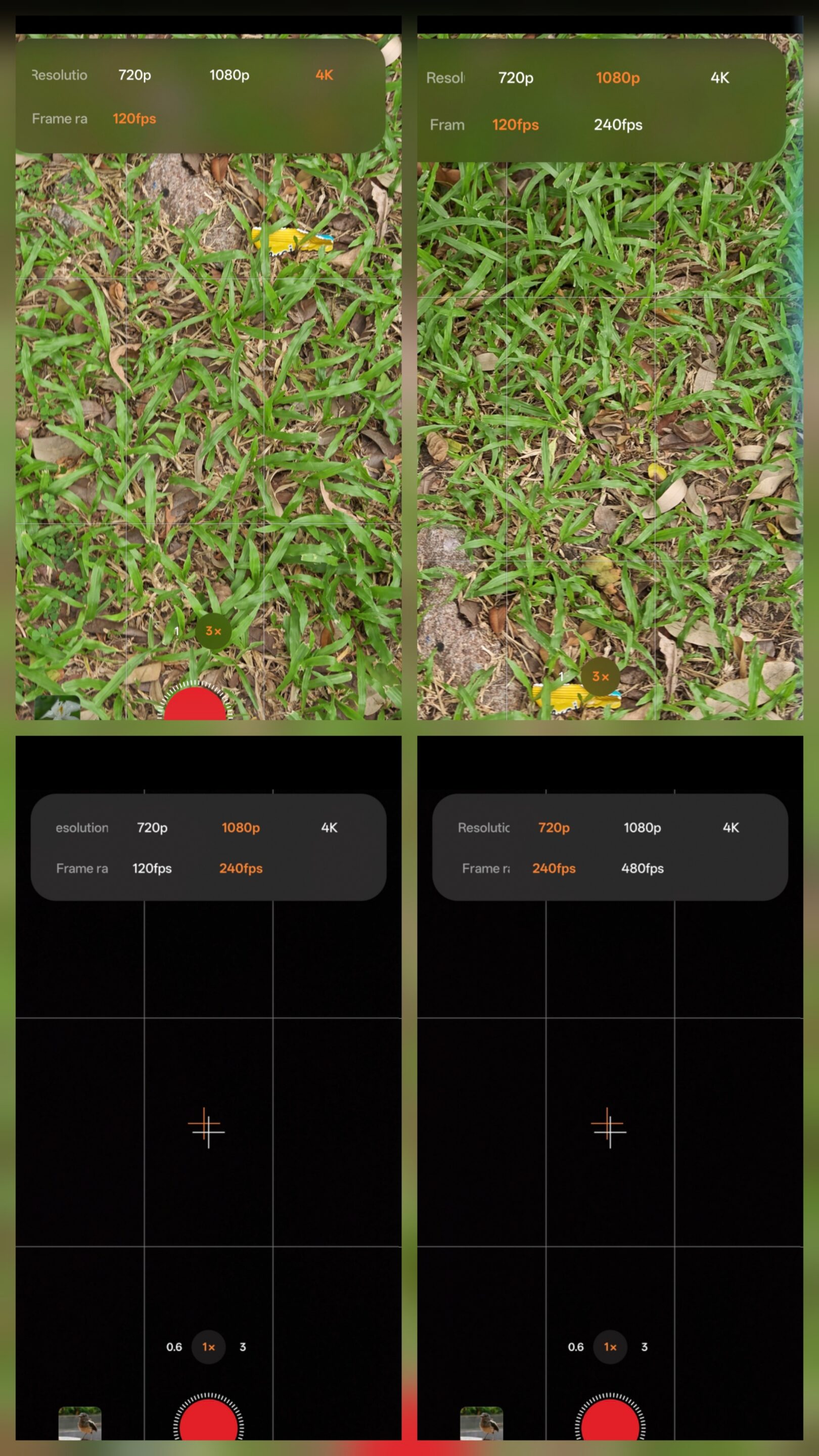
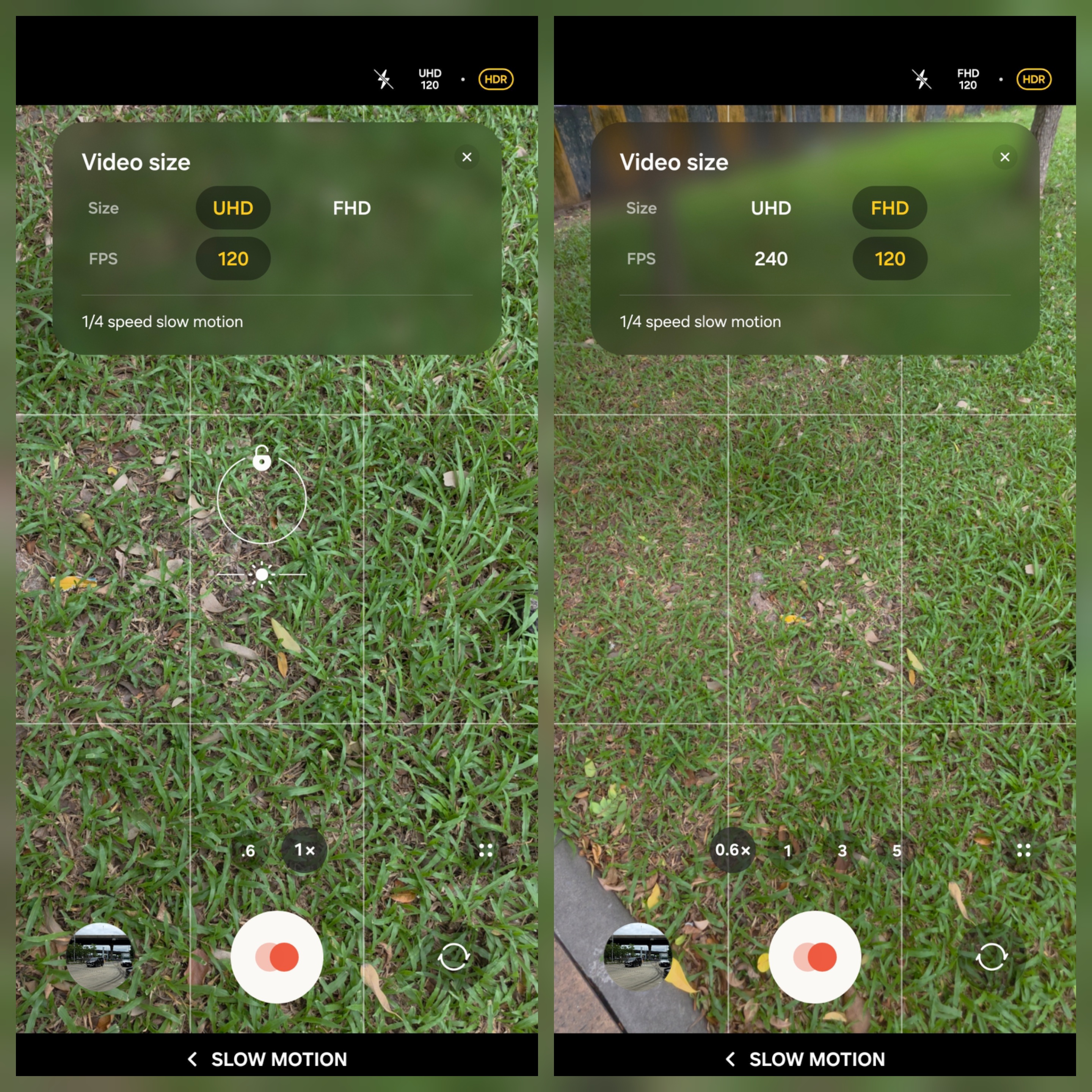
Both smartphones support 4K recording at up to 120fps, delivering good image quality while preserving enough detail for cinematic playback. Samsung enables this mode through the Ultra-Wide and Main cameras, while OPPO enables it through the Main and 3x telephoto cameras. Samsung prioritizes flexibility at wider focal lengths, while OPPO prioritizes reach and telephoto quality.
The difference may sound small, but it reveals two distinct philosophies. Samsung prioritizes compositional flexibility while OPPO prioritizes optical quality. For creators who frequently shoot wildlife, sports, performances, or distant subjects, OPPO’s decision to enable 4K120 on the 3x camera can be particularly valuable.
Full HD Recording Flexibility
Samsung deserves significant credit here. The Galaxy S26 Ultra supports 120fps and 240fps recording across the Ultra-Wide, 1x, 3x, and 5x cameras, creating one of the most flexible slow-motion systems currently available on a smartphone. In unpredictable shooting situations, that flexibility matters. Users can focus on composition first rather than worrying whether a specific lens supports their preferred recording mode.
OPPO’s implementation is more selective. Full HD 120fps supports the 1x and 3x cameras, while 240fps expands support to the Ultra-Wide, 1x, and 3x cameras. The lens support is narrower. The image quality story, however, becomes more complicated.
The 480fps Question
OPPO also offers a specification advantage that Samsung does not. The Find X9 Ultra supports 720p recording at up to 480fps through the Main and 3x cameras. On paper, this is a clear advantage. In practice, the value depends entirely on the user.
Most creators in 2026 understandably prefer Full HD or 4K output whenever possible. Resolution matters more than ever across modern displays and social media platforms.
Interestingly, Samsung itself previously experimented with extremely high frame-rate recording through its 960fps Super Slow Motion feature. Over time, however, the company shifted toward higher-quality recording modes such as 4K 120fps and Full HD 240fps. That decision reflects a broader industry trend. Manufacturers are increasingly prioritizing image quality and usable footage over chasing the highest possible frame-rate numbers.
Even so, additional creative options remain valuable. While 720p 480fps may not be a mode most creators use every day, it can still produce effects that are difficult to replicate at lower frame rates. Samsung no longer offers an equivalent mode, giving OPPO a clear advantage in this area.
Image Quality Matters More
Despite Samsung’s broader lens support, OPPO generally produces stronger slow-motion footage across extended testing. The difference is not dramatic at 1x, where both devices perform at a high level. The same applies to the Telephoto 3x and 5x lenses in daylight.
But OPPO begins pulling ahead once telephoto cameras enter the equation.
Surprisingly, despite Samsung offering broader slow-motion support across more focal lengths, OPPO’s telephoto slow-motion footage often looks noticeably cleaner. In several scenarios, the Find X9 Ultra’s 3x camera produced results that were difficult for Samsung’s 3x and even 5x cameras to consistently match.
The advantage becomes particularly noticeable in less-than-ideal lighting conditions where noise control starts playing a larger role in overall image quality. Detail retention remains stronger, Noise is generally lower And the footage often looks cleaner straight out of the camera.
Ultimately, viewers watch the footage. Not the specification sheet.
Samsung’s Hidden Advantage
Samsung still deserves recognition for one area often overlooked. The company treats slow motion as part of a broader ecosystem rather than an isolated recording mode. Features such as Instant Slow Motion allow compatible videos to be slowed down directly from the Gallery application after capture, extending slow-motion functionality beyond dedicated high-frame-rate recording.
Users can slow compatible footage down to as much as 1/16x playback speed, depending on the source frame rate, creating effects that traditionally required dedicated slow-motion capture at the moment of recording. That feature belongs more to the overall video experience and will be explored in greater detail during the upcoming video comparison. But it highlights an important difference in philosophy.
This comparison reveals a broader truth about smartphone imaging in 2026. The industry continues racing toward bigger specifications, yet many of the limitations creators encounter today have very little to do with frame rate itself. Lens support matters, Workflow matters, Resolution matters. But ultimately, image quality still matters most.
Samsung delivers a more flexible slow-motion system. Its broader lens compatibility makes it easier to capture a wider variety of perspectives without changing recording modes or sacrificing functionality.
Ironically, Samsung spent years expanding slow-motion flexibility while moving away from ultra-high frame-rate modes, yet OPPO’s stronger camera hardware still produces better slow-motion footage in many real-world situations. It is a reminder that recording options alone do not determine the final result. Hardware quality still matters when the footage is played back.
The Find X9 Ultra’s stronger optics translate into cleaner slow-motion video, better telephoto performance, lower visible noise, and more consistent image quality when conditions become challenging. The additional 480fps mode may not be essential for most users, but it further reinforces OPPO’s focus on pushing capture capabilities as far as possible.
Perhaps the biggest takeaway is that smartphone slow motion still has significant room to grow. The next breakthrough may not be another frame-rate milestone. It may simply be delivering flagship-quality slow motion across every camera without compromise.
Until then, users seeking the most flexible experience may prefer Samsung. Users seeking the strongest footage will likely prefer OPPO.
For Slow Motion, the category goes to OPPO.
Current Comparison Standing
This comparison series evaluates long-term flagship ownership rather than isolated benchmark victories or specification advantages alone. Each category focuses on what genuinely changes the daily experience of using these devices, including camera behavior, endurance consistency, charging flexibility, usability, and software refinement.
After evaluating the telemacro capability, zoom performance, design choices, camera usability, pre-order experience, unboxing, battery architecture, standby efficiency, charging experience, Auto Mode photography, RAW photography, Special Modes, and now Slow Motion, OPPO strengthens its lead once again.
OPPO now holds 13 points, while Samsung remains at 11, keeping the race alive but widening the gap once more.
That said, the race remains far from over. Upcoming categories, including Video Recording, Pro Video, Portrait Photography, Display Quality, One UI ecosystem advantages, Audio Performance, and Long-Term Software Experience, may still reshape the outcome significantly.
Stay tuned.


Follow us on Google Discover & set us as a preferred source in Google News
Share this Post
___________________________


New Blog Posts
___________________________

iPhone Ultra Could Arrive a Month After Galaxy Z Fold 8
Apple may join the foldable smartphone race this September
Galaxy Z Fold 8 Leaks in Four Colors, Entire Specs Revealed
The latest Galaxy Z Fold 8 leak leaves almost nothing to the imagination
Samsung’s Entire Galaxy Z Fold 8 and Flip 8 Case Lineup Leaks (Over 130 Images)
You can see them all here