Why Samsung May Be Skipping One UI 8.5 for Galaxy S22 and Other 2022 Devices

SammyGuru is reader-supported. We have affiliate and sponsored partnerships, so we may earn a commission when you buy through links on our site — at no extra cost to you. Learn more.
For years, Samsung followed a simple pattern with One UI updates: if a Galaxy device received a major release, it would also get any subsequent point updates built on the same Android version. A phone that was eligible for One UI 6.0, for example, would eventually receive One UI 6.1. However, One UI 8.5 may be breaking that long-standing tradition. Despite receiving Android 16-based One UI 8.0 earlier this year, devices like the Galaxy S22 series may miss out on One UI 8.5.
Users are understandably frustrated, but Samsung may have a valid reason for drawing the line at certain older devices. Rather than being an arbitrary decision, the apparent exclusion of phones like the Galaxy S22 could be tied to bigger changes in One UI 8.5 itself. Here’s why this update may be different from every One UI point release that came before it.
Samsung may have a reason to exclude the Galaxy S22 and others from its One UI 8.5 rollout
Every new One UI release from Samsung introduces a new Android version as well. One UI 6.0 was based on Android 14, One UI 7.0 on Android 15, and One UI 8.0 on Android 16. Any point release under a One UI version also runs the same Android base. This means One UI 8.5 is also based on Android 16. However, this time around, there’s a fundamental difference in the exact Android build, and that changes everything.
Historically, updates such as One UI 5.1, One UI 6.1, and One UI 6.1.1 were relatively straightforward evolutions of their base versions. They shared the same Android platform underneath and mainly focused on adding new features, interface improvements, and optimizations. But One UI 8.5 doesn’t share the same Android 16 foundation used by One UI 8.0. Samsung’s latest software is based on Android 16 QPR2.
That distinction may sound minor, but it changes the equation considerably. Google’s Quarterly Platform Releases (QPR) are more than simple feature packs. They introduce deeper platform changes, updated APIs, revised frameworks, and new development tools. In practical terms, One UI 8.5 sits closer to a platform upgrade than a traditional mid-cycle One UI release.
That’s important because every additional platform-level change increases the engineering effort required to support older hardware. Samsung isn’t simply adding a handful of features. It may effectively be adapting a newer Android branch to devices nearing the end of their life.
If recent developments are any indication, Samsung appears to be drawing a clearer line between devices that are still within their promised Android upgrade window and those that have already reached the end of it. The Galaxy S22 series, Galaxy Z Fold 4, Galaxy Z Flip 4, Galaxy A53, Galaxy A33, and several other 2022 devices are no longer eligible for Android 17 (One UI 9.0). And Samsung may not even push One UI 8.5 to them.
Samsung did want to deliver One UI 8.5 to some of these phones
It’s not as if Samsung always intended to leave devices like the Galaxy S22 series out of the One UI 8.5 rollout. In fact, the company initially appeared to be developing the update for several 2022 models. Test firmware builds surfaced on its official servers, indicating that work on One UI 8.5 was underway behind the scenes. However, that development activity abruptly stopped a few weeks before the stable rollout began.
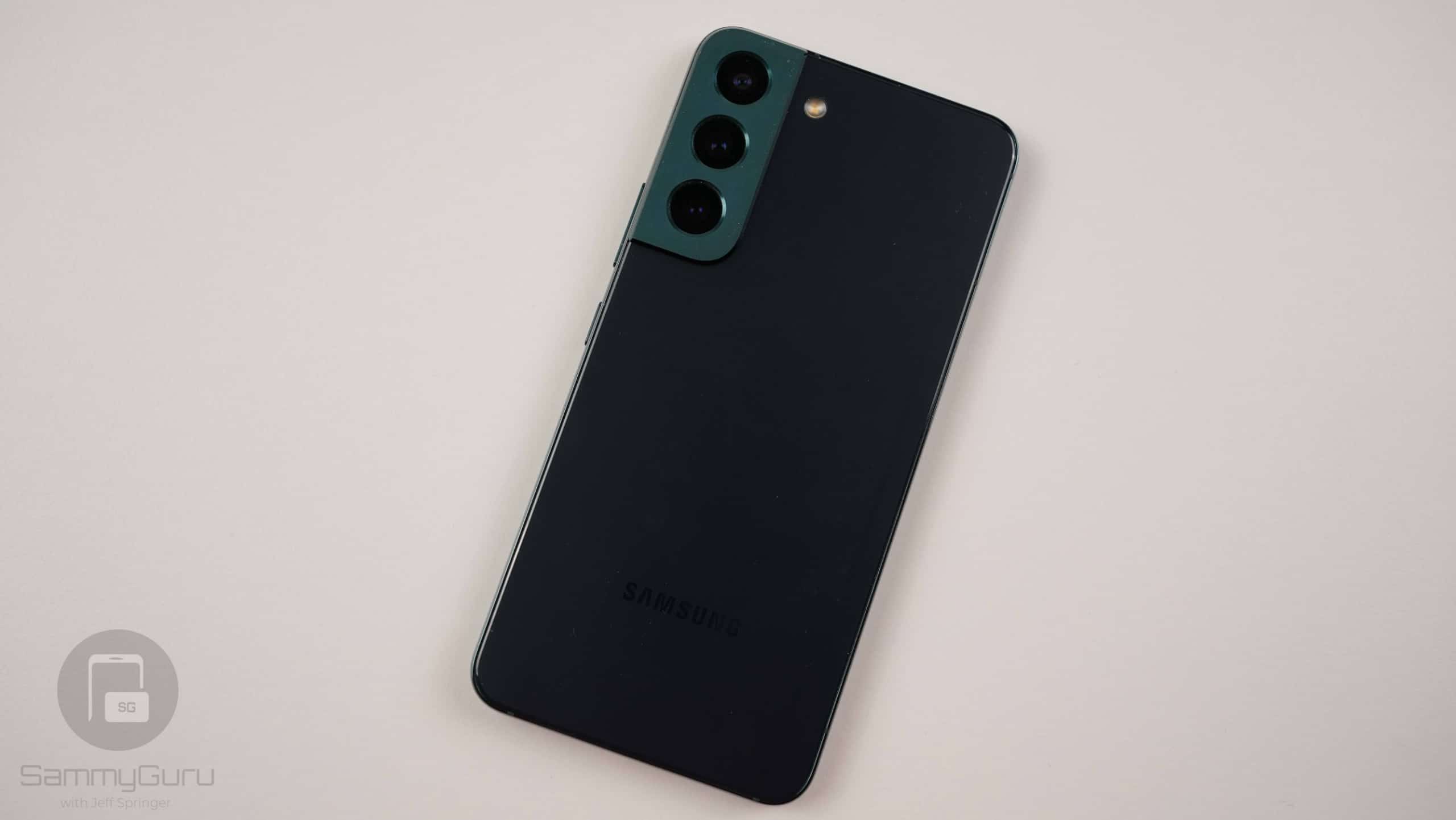
Why would Samsung do that? The most likely explanation is resource allocation. Bringing One UI 8.5 to older devices may have required considerably more engineering effort than previous point releases, while offering relatively little strategic benefit. Devices such as the Galaxy S22, Galaxy Z Fold 4, and Galaxy A53 had already received the four generations of Android OS upgrades Samsung originally promised.
From the company’s perspective, investing additional resources into a non-obligatory update may simply not have made sense. After all, Samsung never promised One UI 8.5. It promised Android upgrades, and it delivered those.
That doesn’t make the decision any less disappointing for affected users, though. But it does suggest that Samsung’s apparent change in strategy is driven more by practical considerations than by an arbitrary decision to cut older devices off from new features.
Could this become Samsung’s new strategy?
If One UI 8.5 truly marks a policy shift, its impact may extend far beyond 2022 devices. Future One UI x.5 releases could become the dividing line between devices still receiving major Android upgrades and those that have reached the end of their promised support window. Especially if the point releases follow the same Android QPR-based strategy as One UI 8.5.
Take the Galaxy S23 series as an example. The 2023 flagships should receive Android 17 and One UI 9.0 because those updates fall within Samsung’s support commitment. But if One UI 9.5 runs a new QPR-based Android 17 build, Samsung may decide not to bring it to the S23 lineup, as well as other devices whose Android upgrade eligibility has expired.

Samsung’s software support commitments have also expanded dramatically over the last few years. New flagship devices now receive up to seven generations of Android OS upgrades. Many mid-range and budget phones receive six years of updates.
Those commitments sound fantastic on paper, but they also create a growing maintenance burden. Every year, Samsung must support more devices than ever before. Each new generation adds to an already expanding list of phones and tablets requiring development, testing, certification, carrier approval, and bug fixing. At some point, resource allocation becomes a practical concern.
Of course, Samsung hasn’t officially announced any such policy change. In fact, the company hasn’t even explicitly confirmed that devices like the Galaxy S22 series, Galaxy Z Fold 4, and Galaxy A53 will miss out on One UI 8.5. That uncertainty is reflected in the mixed messages coming from its support channels, with some representatives claiming the update is still planned while others suggest it isn’t coming.
For now, all we can do is connect the dots. The apparent halt in One UI 8.5 development for older devices, combined with the rollout pattern we’re seeing, certainly points in one direction. But until Samsung makes an official statement, the door remains slightly open. It’s entirely possible that the company is still evaluating its options behind the scenes. We’ll know soon enough.

Written by
Sumit AdhikariSumit, a life-long Samsung user, is passionate about technology and has been professionally writing on tech since 2017. He’s a mathematics graduate by education and enjoys teaching basic mathematics tricks to school kids in his spare time. Sumit believes in artificial intelligence and dreams of a fully open, intelligent and connected world.

Follow us on Google Discover & set us as a preferred source in Google News
Share this Post
___________________________


New Blog Posts
___________________________
When I Get Galaxy Glasses, I’ll Want the Galaxy Ring Too
The Ring finds its perfect match
This Galaxy S26 Ultra Deal Lets You Save $350 on Every Color
Who doesn’t love discounts?
One UI 9 May Bring Eclipsa Video Support To Galaxy Devices
Android 17 paves the way