Samsung May Fail to Put Exynos in 50% Galaxy S27 Units

SammyGuru is reader-supported. We have affiliate and sponsored partnerships, so we may earn a commission when you buy through links on our site — at no extra cost to you. Learn more.
Samsung’s ambitions to power 50% of next year’s Galaxy S27 models with its Exynos chips may be in doubt. The rising chip production costs and strong competition from Qualcomm may make the plan harder to achieve. As such, the Korean firm may once again have to rely more on external chips for its next-gen flagship lineup.
The Galaxy S27 lineup may not see higher Exynos usage
Samsung’s Galaxy S26 series adopted a dual-chip strategy for the Galaxy S26 and S26+. The models use the Exynos 2600 or Snapdragon 8 Elite Gen 5, depending on the market. Meanwhile, the Galaxy S26 Ultra features Qualcomm’s flagship chip globally. Reports suggest that Exynos accounts for roughly 25% of Galaxy S26 models.
This is indeed a huge achievement, as Samsung failed to power the 2025 Galaxy S25 models with Exynos chips due to production and yield challenges. Now, with the next-gen Exynos 2700, Samsung reportedly intends to increase Exynos adoption to around 50% across the Galaxy S27 lineup.
However, that may not be possible, as the company’s MX division may lean heavily on Qualcomm’s offerings. The American firm could introduce two flagship mobile chips this year, including the Snapdragon 8 Elite Gen 6 and Snapdragon 8 Elite Gen 6 Pro. These chips could use TSMC’s 2nm N2P architecture, which is said to be superior to Exynos 2700’s second-gen 2nm GAA node. So, this could put the Korean firm’s chip at a disadvantage.
Moreover, a tipster suggests that Exynos 2700 may also be more expensive to produce. As a result, the Korean may struggle to match Qualcomm’s pricing. The MX division will also have greater flexibility to choose between a base or a higher-end Snapdragon option, depending on cost and performance needs.
Naturally, the Galaxy S27 Ultra should use the Snapdragon 8 Elite Gen 6 Pro despite the higher price. We’ll let you know if more details about the chip adoption strategy come to light.

Written by
Binay KonwarBinay Konwar started his blogging journey in 2014 and has since written plenty of tech articles. At present, he is working as a News Writer at SammyGuru, covering everything about Samsung. He holds a Master's degree in Mathematics, but his real passion lies in tech and writing. In his free time, he enjoys playing chess and watching movies.

Follow us on Google Discover & set us as a preferred source in Google News
Share this Post
___________________________


New Blog Posts
___________________________
Five Hidden Samsung Galaxy Features You Should Start Using Today
One UI includes several practical features that can make your phone more useful every day.

Samsung May Have Completed the One UI 8.5 Rollout
No One UI 8.5 for Galaxy S22 series, after all
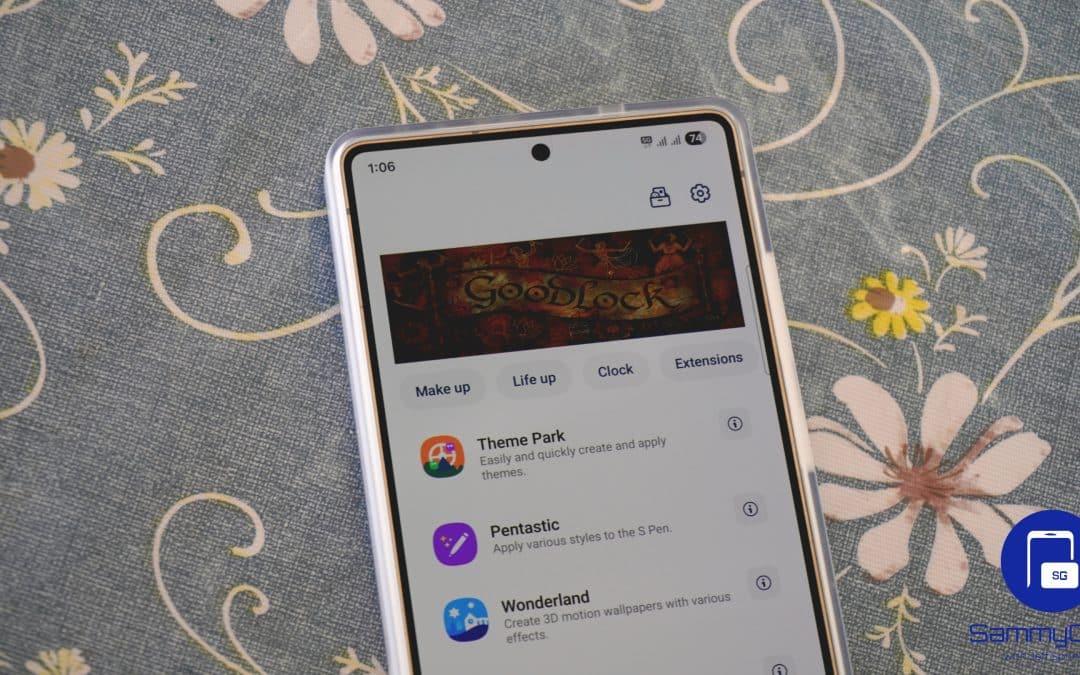
Good Lock Nears Full One UI 9 Compatibility, Only Six Modules Remain Unsupported
QuickStar and MultiStar now support One UI 9