Samsung Hit by Slowing Smartphone Market in Q1 2026
SammyGuru is reader-supported. We have affiliate and sponsored partnerships, so we may earn a commission when you buy through links on our site — at no extra cost to you. Learn more.
The global smartphone market slowed in the first quarter of 2026, and Samsung was hit hard. The Korean firm saw a decline in shipments during the period despite the launch of its flagship devices. It also lost the top spot in this space to arch-rival Apple.
Samsung slips to second spot in global smartphone shipments
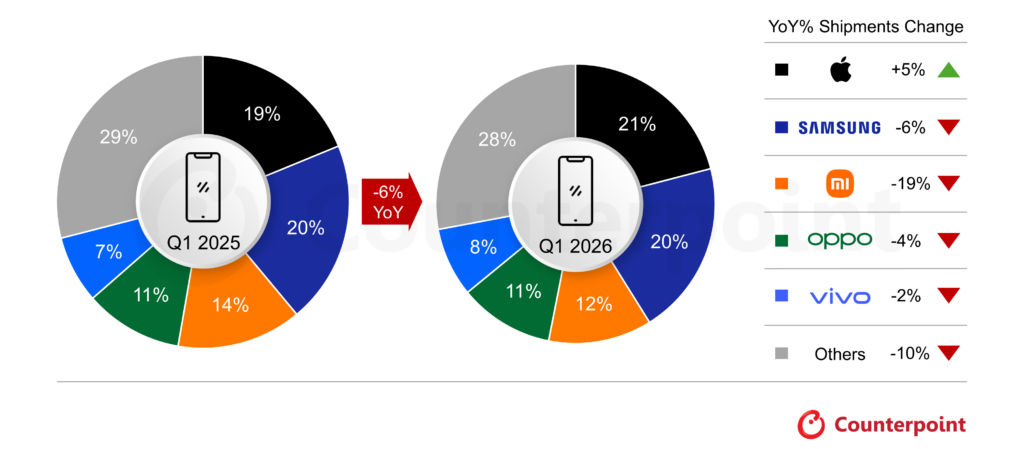
According to preliminary data from Counterpoint Research, Samsung’s smartphone shipments dropped 6% YoY in Q1 2026. However, its market share remained flat at 20%. The decline comes from weaker demand in the mass-market segment. Moreover, delays in the launch of the Galaxy S26 series affected overall shipment volumes during the quarter. The Korean firm now holds the second position.
However, Samsung continues to see solid demand for the Galaxy S26 series (especially the Ultra model) around the world. The company reportedly increased production volumes of the latest flagship models for April. As such, it may see an improvement in shipments in the second quarter of 2026, though only time will tell.
Meanwhile, like other OEMs, rising memory chip costs have also put pressure on pricing and margins. To tackle this, Samsung has streamlined entry-level options and focused more on higher-tier configurations. This has led to higher starting prices while bolstering the premium standings of its smartphones.
Apple led the global smartphone market for the first time in Q1 with 21% market share. The company benefited from robust demand for the iPhone 17 series, compelling trade-in offers, and ecosystem stickiness. Xiaomi (12% share) secured third position, though it saw the sharpest YoY decline (19%) among the top five brands. Meanwhile, OPPO (11% share) and vivo (8% share) took the fourth and fifth spots, respectively.
Speaking of the overall global smartphone market, shipments dropped 6% YoY in Q1 2026. “This decline in shipments is primarily driven by memory players prioritizing AI data centers over consumer electronics, leaving OEMs with compressed margins and forcing them to pass increased Bills of Material (BOM) costs directly to the consumer,” said Senior Analyst Shilpi Jain.

Written by
Binay KonwarBinay Konwar started his blogging journey in 2014 and has since written plenty of tech articles. At present, he is working as a News Writer at SammyGuru, covering everything about Samsung. He holds a Master's degree in Mathematics, but his real passion lies in tech and writing. In his free time, he enjoys playing chess and watching movies.

Follow us on Google Discover & set us as a preferred source in Google News
Share this Post
___________________________


New Blog Posts
___________________________

Samsung to Invest $1.72 Trillion in South Korea for AI Chips, Displays, and Batteries
Most of the money is going into chip production

Samsung’s Rollable Galaxy Phone Moves Closer to Reality
It reportedly aims to debut the device in the first half of 2028

PSA: Buy Plex Lifetime Pass Now If You Don’t Want to Pay $500 Extra
You only have less than two days to lock in the current price