Galaxy S26 Ultra Fusion Camera: Is Samsung “Faking” 5x Zoom — Or Something Smarter?

SammyGuru is reader-supported. We have affiliate and sponsored partnerships, so we may earn a commission when you buy through links on our site — at no extra cost to you. Learn more.
On paper, the Galaxy S26 Ultra presents a familiar camera formula — a high-resolution main sensor paired with a dedicated 5x periscope telephoto designed to deliver true optical reach. In normal use, it behaves exactly as expected. The perspective at 5x is correct, framing is consistent, and the compression clearly reflects a telephoto lens operating at longer focal lengths.
However, once testing moves beyond the image itself and into how the system identifies and processes that image, the behavior becomes less straightforward. Under certain conditions, the final output no longer aligns with the lens that physically captured the scene. This does not happen randomly or occasionally, but in a consistent and repeatable way.
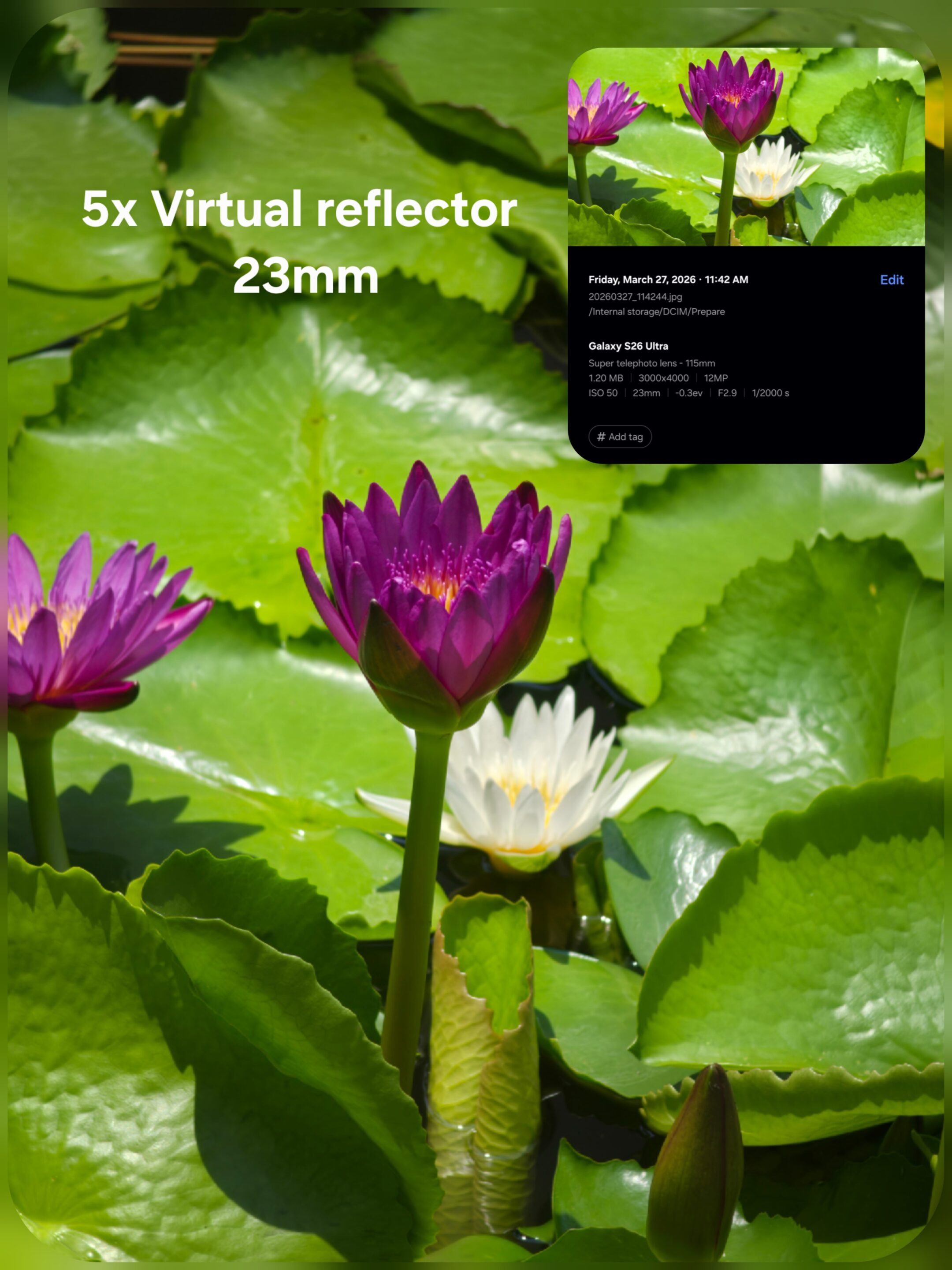
At first, it appears to be a simple metadata inconsistency. In reality, it is something far more deliberate.
From theory to observable behavior
In a previous analysis, I introduced what I described as the Frankenstein theory, the idea that Samsung did not simply reuse the 200MP HP2 sensor in the Galaxy S26 Ultra, but instead refined its role within the system. The main sensor was no longer just responsible for capture, but increasingly positioned as a stabilizing foundation, particularly under the pressure introduced by a brighter f/1.4 aperture.
Alongside that, I examined the trade-offs of the new 5x telephoto system. A brighter periscope lens improves light intake, but it also introduces physical limitations such as increased crosstalk, light leakage, and instability at longer focal lengths. These are not flaws, but natural consequences of pushing optical hardware further within a constrained smartphone design.
At the time, both ideas were based on engineering logic — not confirmation, but a pattern. Now, that pattern begins to show itself in real-world behavior.
The 5x inconsistency that isn’t a mistake
While testing Virtual Reflector inside Expert RAW, the system initially behaves exactly as expected. The main camera reports 23mm, the 3x telephoto reports 69mm, and everything aligns with the physical lenses in use. At 5x, however, the behavior changes. Instead of reporting 115mm, the system identifies the output as 23mm.
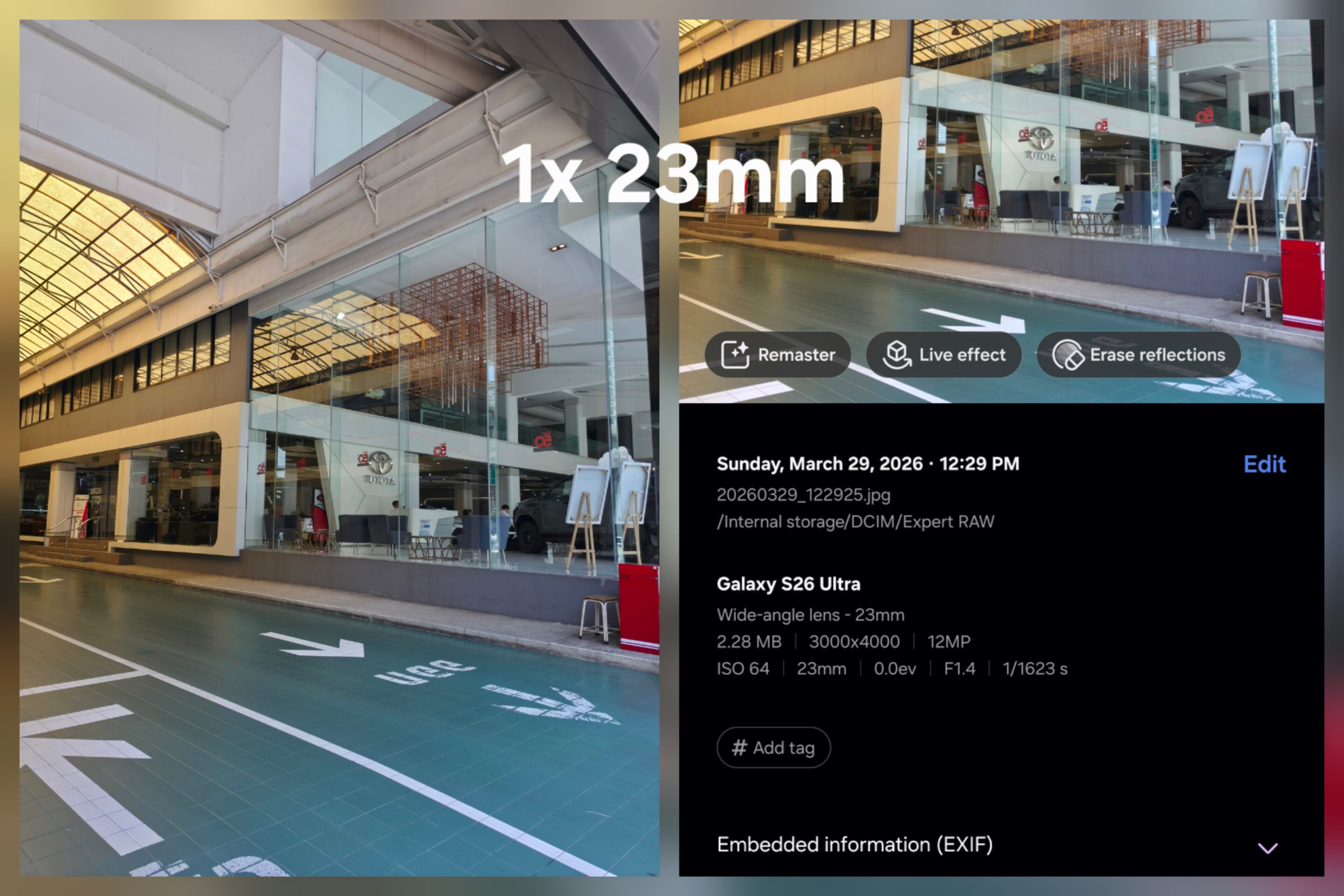
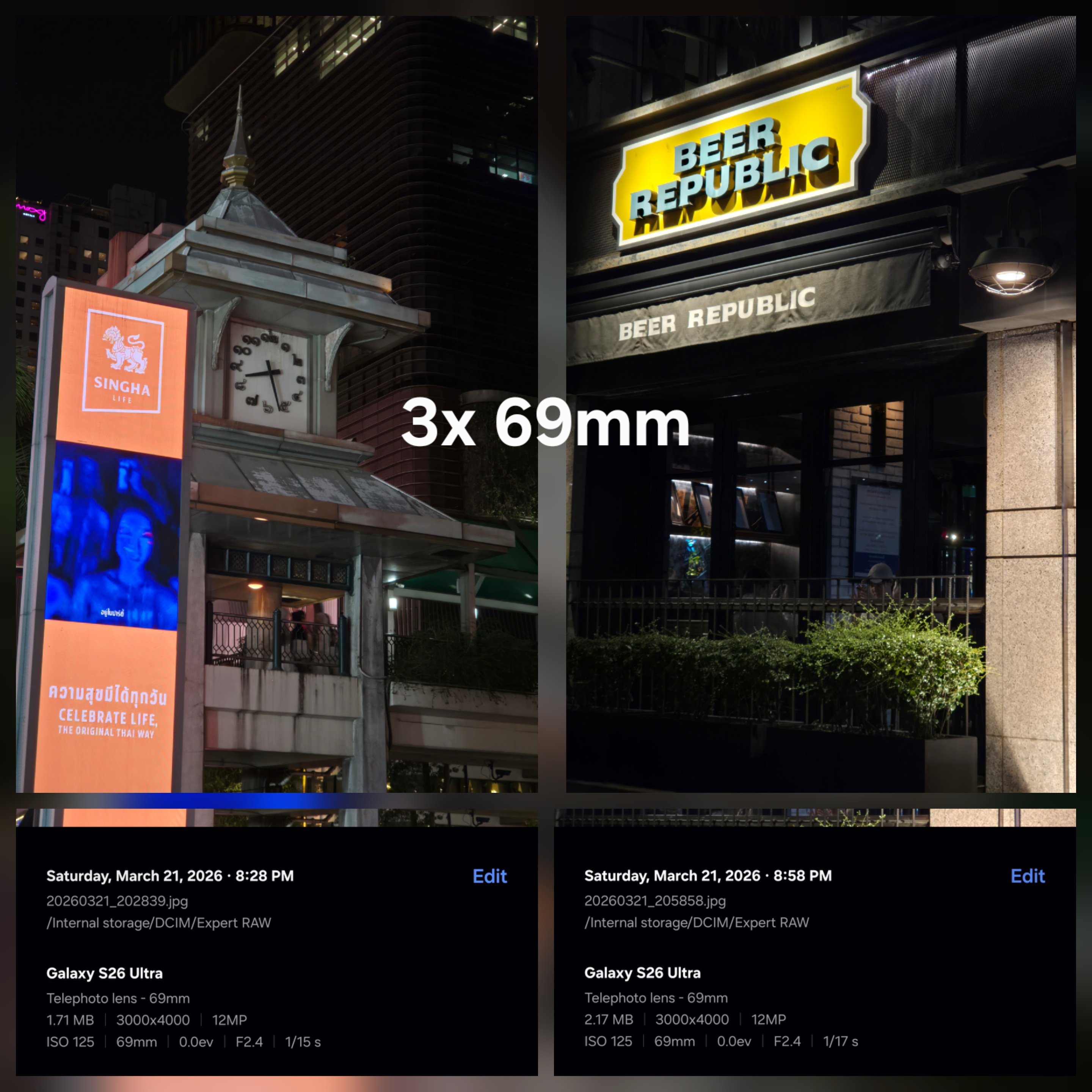

At a glance, this looks like a metadata error. But further testing quickly eliminates that possibility. Covering the 5x lens results in a completely black frame, confirming that the telephoto camera is physically capturing the scene. Perspective, compression, and subject distance all match true 5x behavior. Despite that, the final image is still identified as 23mm.
This is not an error. Errors do not behave with this level of consistency under controlled conditions. What this reveals is a deliberate system-level decision.
Virtual Aperture vs Virtual Reflector
Understanding this behavior requires looking at how different computational modes operate within the camera system.
Virtual Aperture behaves predictably and remains tied to the optical identity of each lens. At 1x, 3x, and 5x, the output aligns with the expected focal lengths, with no indication of override or hierarchy shift. The system enhances depth simulation, but it does not redefine the source of the image.

Virtual Reflector operates differently. Instead of simulating depth, it reconstructs light across the entire scene. Shadow direction, highlight control, and exposure balance are recalculated at a global level. Once processing reaches this stage, the lens alone is no longer sufficient to define the final image. This is where the system begins to make decisions.
Why 3x holds — and 5x doesn’t
At 3x, the pipeline remains stable even under Virtual Reflector. The output continues to report 69mm, and the system does not override the telephoto identity. This is not accidental. The 3x camera relies on Samsung’s ISOCELL S5K3LD sensor, which is more stable and predictable under heavy processing conditions.
Fusion between sensors still occurs, but it remains controlled. The main sensor contributes in the background, without taking authority over the final output. As a result, the system remains anchored to the 3x lens.
At 5x, the situation changes significantly. The brighter aperture introduces additional optical complexity, including crosstalk between pixels, light leakage, and subtle instability that becomes more visible under advanced processing conditions.
Nothing is failing here — this is expected at this level of sensor physics. However, instead of forcing the telephoto sensor to carry the full processing load, Samsung shifts its strategy.
The moment the system takes over
At 5x, the telephoto lens continues to define the scene. Perspective remains accurate, framing is unchanged, and there is no indication of artificial zoom. The capture itself is real. What changes is the authority over the final image.
Under the heavier processing demands of Virtual Reflector, the system begins to rely more heavily on the main sensor. The telephoto provides spatial information, but the main sensor increasingly defines exposure, dynamic range, and overall image reconstruction.
This shift is reflected in the output metadata (23mm). What appears at first as an inconsistency is actually a glimpse into how the system prioritizes its components under stress.
A hidden fusion system, now visible
Sensor fusion is not new in smartphone photography. It already operates across Auto mode, Expert RAW, and other computational features. In most cases, however, it remains invisible. The pipeline presents itself as lens-driven, and the EXIF data reflects that simplicity.
At 5x within Virtual Reflector, the demands become significantly higher. Scene-wide light reconstruction, dynamic range balancing, and consistency across the frame push the system beyond subtle fusion. At this point, the hierarchy becomes visible. The system no longer prioritizes the selected lens alone. It prioritizes the sensor it trusts most to complete the image.
Hardware limits and system response
At 1x and 3x, the behavior largely reflects engineering constraints tied to device design. Integrating high-performance sensors into a thin ~7.9mm body requires compromises, but these are balanced within the system.
At 5x, the trade-off becomes more noticeable. Samsung’s use of Sony’s IMX854 — a non-dual-layer stacked sensor — combined with a brighter f/2.9 aperture, introduces known limitations. These include increased light leakage, higher crosstalk, and more visible micro-instability, particularly in challenging lighting conditions.
A more advanced dual-layer stacked sensor at the same size could reduce these issues, which suggests that cost optimization plays a role at this level.
However, this is not all about cost-cutting. Instead of exposing these limitations, Samsung compensates for them through a more aggressive fusion pipeline, leveraging the refined HP2 main sensor to stabilize and reconstruct the final image. Samsung isn’t avoiding limitations, but controlling them.
The Galaxy S26 Ultra no longer behaves like a traditional multi-camera system where each lens operates independently. It behaves as a unified imaging pipeline where roles shift depending on the situation. The main camera does not always capture the scene, but it increasingly defines the result. It isn’t about which lens you use. It is about which sensor the system trusts to finish the image.
That level of control is what makes features like Virtual Reflector possible at this level. Instead of being limited by hardware constraints, the system redistributes the workload across sensors, allowing more advanced modes to operate with a level of consistency that wouldn’t otherwise be achievable.


Follow us on Google Discover & set us as a preferred source in Google News
Share this Post
___________________________


New Blog Posts
___________________________

TM Roh Visits BOE’s OLED Plant Amid Galaxy S27 Rumors
Samsung may expand TV display orders from BOE

Apple is Already Planning a Second Foldable, and Samsung Should Take Notice
Samsung’s grip on the foldable smartphone market is starting to slip
Latest One Hand Operation+ Update Fixes Edge Handle
It also improves the app’s compatibility with One UI 9