Galaxy S26 Ultra Dynamic Fusion: How S27 Ultra Hardware Will Unlock It

SammyGuru is reader-supported. We have affiliate and sponsored partnerships, so we may earn a commission when you buy through links on our site — at no extra cost to you. Learn more.
The Galaxy S26 Ultra Dynamic Fusion system doesn’t start at extreme zoom; it reveals itself much earlier. What first appeared in the previous analysis at 5x wasn’t a glitch, but a shift in behavior. RAW and JPEG both reported 23mm, even while the telephoto lens was clearly active. That wasn’t an error, but the system stepping beyond the lens. And once you see it there, everything that happens at longer zoom ranges starts to make more sense.
Push beyond 10x in Expert RAW, and the system still behaves correctly on the surface. Framing remains accurate, compression reflects true long-range capture, and visually, nothing feels out of place. But internally, the logic becomes fluid.
At higher zoom levels, RAW stops reporting a fixed telephoto reference. Instead, it shifts — sometimes toward mid-range focal lengths, sometimes closer to the main sensor, depending on the scene and processing path. JPEG stays locked to the selected zoom, but RAW does not.
RAW and JPEG are no longer describing the same thing
At this stage, the difference between RAW and JPEG is no longer about quality. It’s about representation. JPEG behaves as a user-facing output. It reflects the selected zoom level, maintains expected focal length, and delivers a consistent, predictable result. What you choose is what you get.
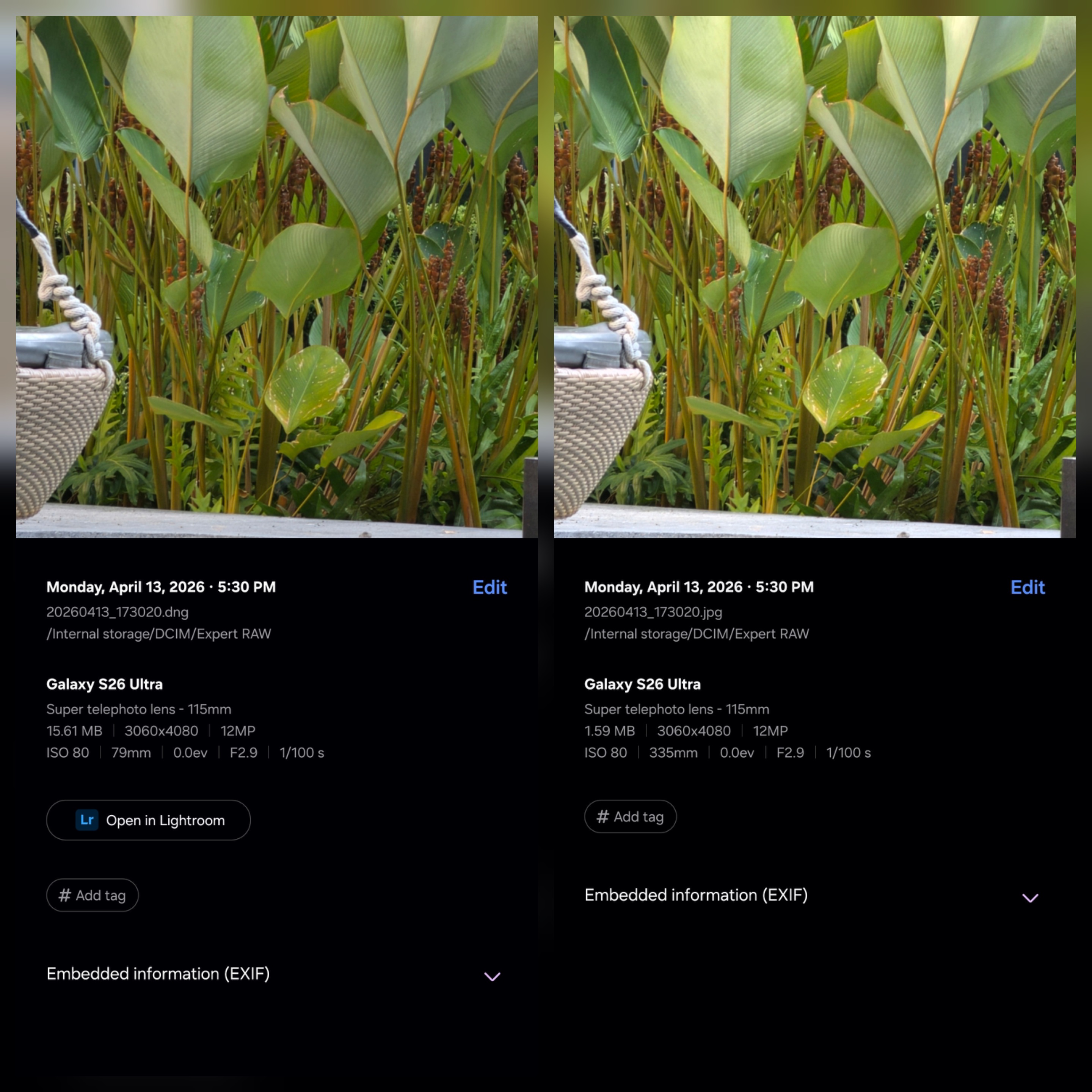
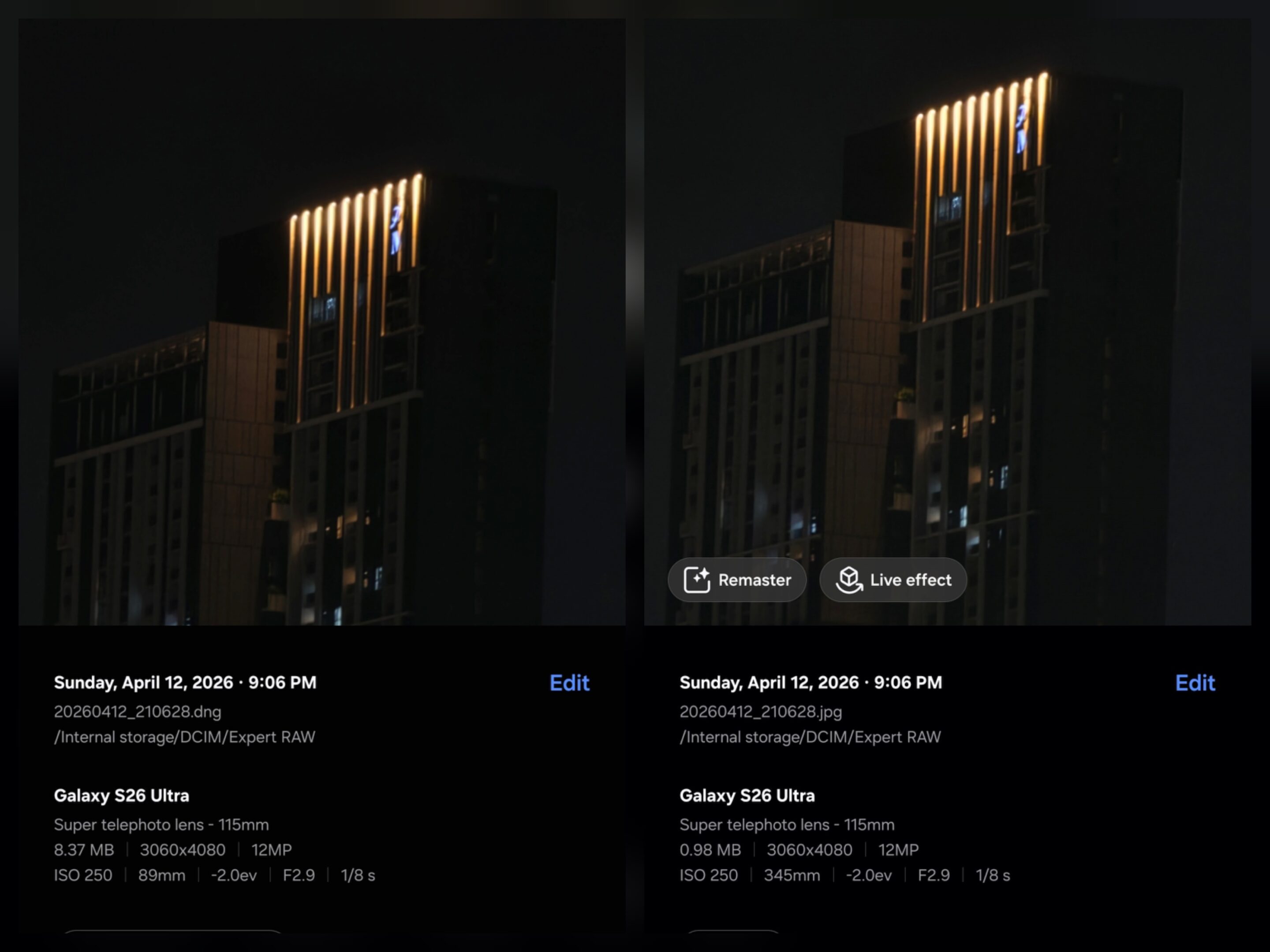
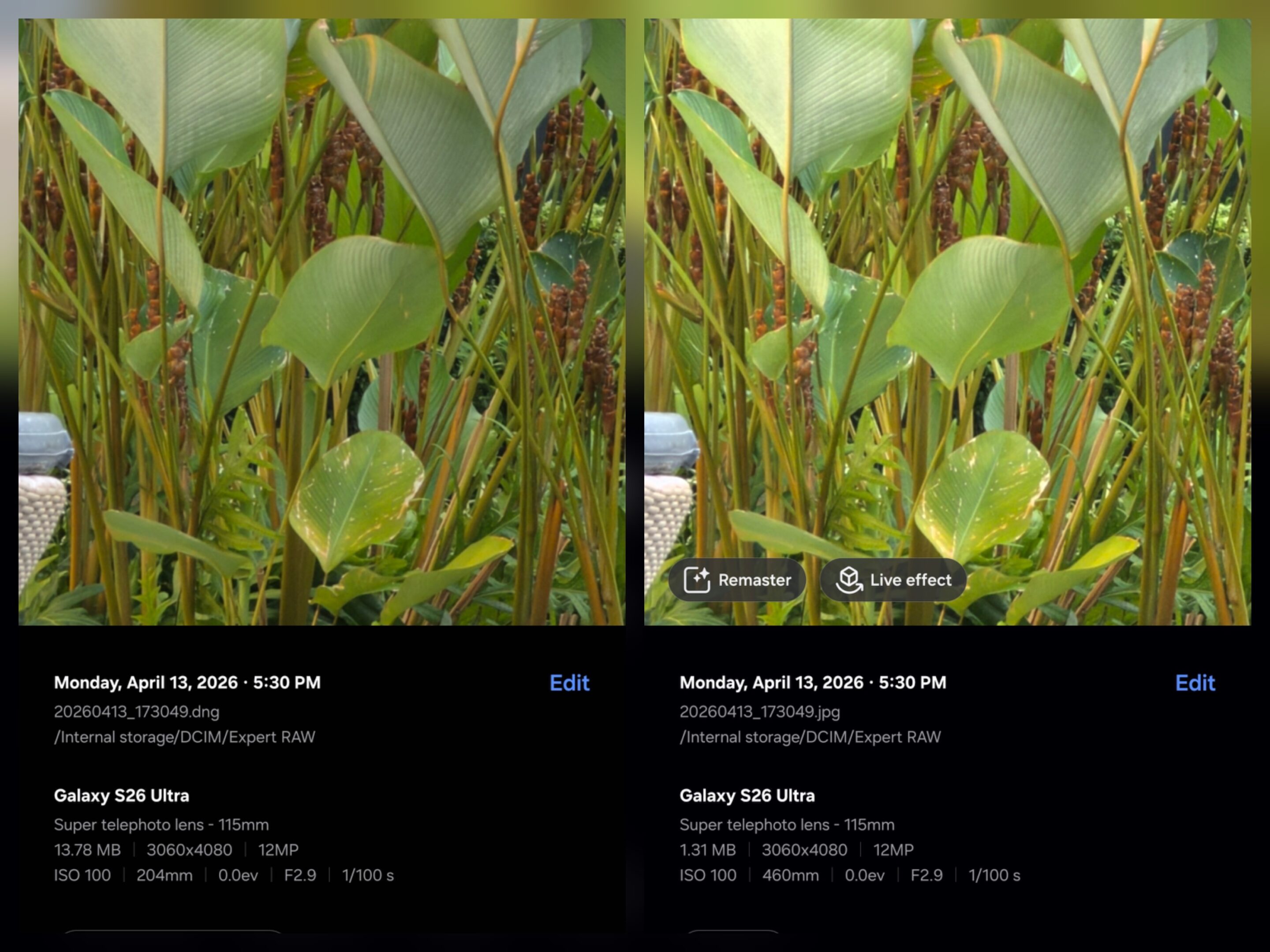
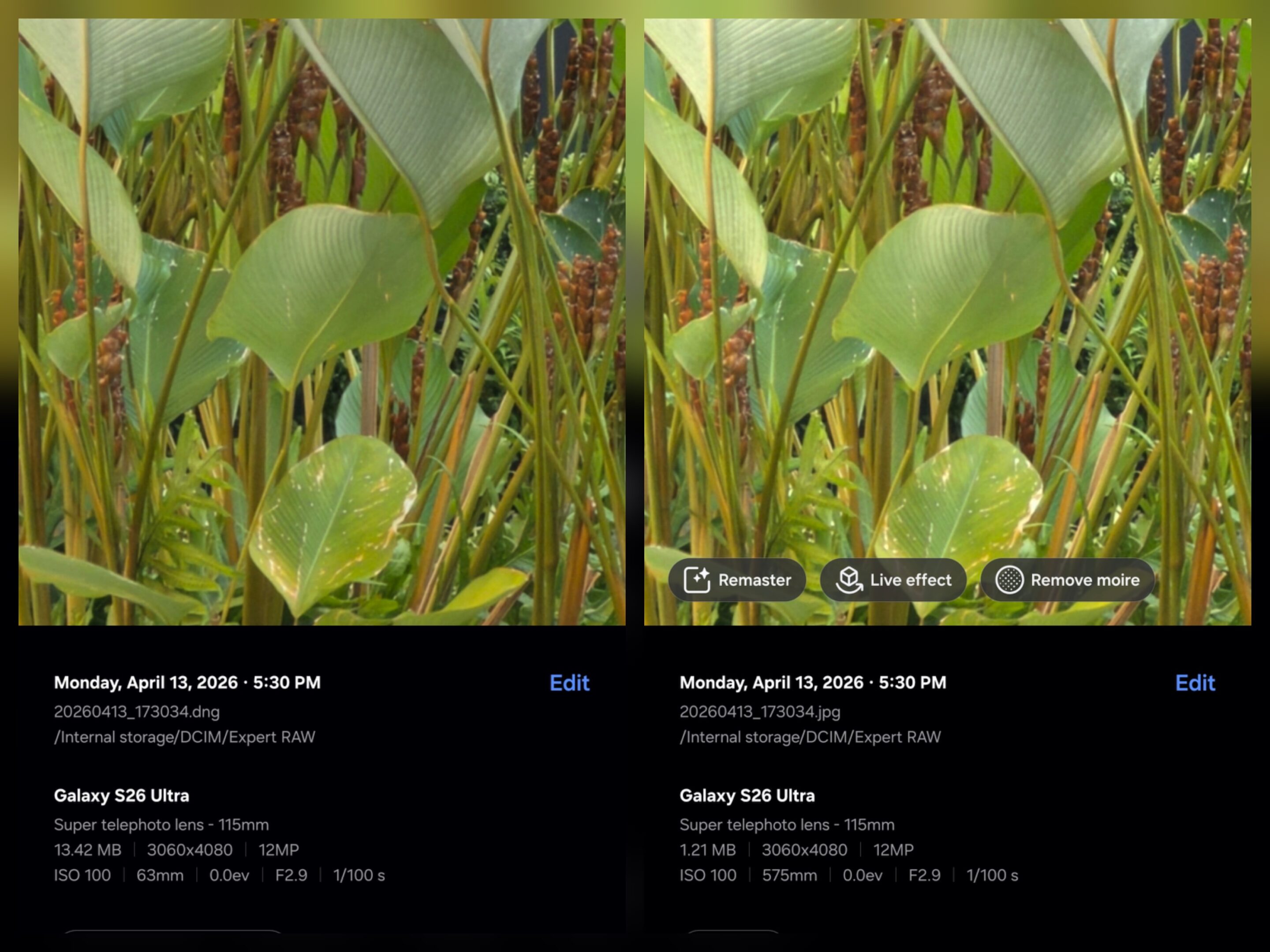
RAW, on the other hand, exposes something deeper. It reflects how the system is constructing the image. Not which lens captured it, but how multiple data sources are being combined. At longer zoom ranges, that structure is no longer tied to a single sensor. It becomes adaptive.
Dynamic Fusion is no longer hidden
At lower zoom levels, the system still follows traditional logic. Each lens has a defined role, which is predictable and hardware-driven. But as zoom increases, that structure begins to dissolve. Not because the hardware fails, but because the system takes control.
The telephoto lens still defines perspective, but it no longer owns the final image. Data from other sensors begins to contribute more aggressively, stabilizing the frame, correcting inconsistencies, and rebuilding detail where optical capture alone reaches its limits. This isn’t fallback processing but deliberate architecture.
This direction was always there
This behavior didn’t suddenly appear with the Galaxy S26 Ultra. Previous generations already blended sensor data beyond what a single lens could capture. But it remained subtle, controlled, and hidden behind stable outputs that didn’t expose the underlying complexity. Now, that same logic becomes visible. While the system hasn’t changed, Samsung is now pushing it further.
The fusion system itself is no longer the bottleneck. It’s already doing the heavy lifting, dynamically blending sensors, stabilizing output, and reconstructing detail across the zoom range. This moves the limitation to hardware rather than software. A larger main sensor, closer to a 1/1.2″ class, would provide cleaner base data, reducing the need for aggressive correction when fusion takes over. Better input leads to more natural output.
Likewise, a more advanced 5x system, through improved, bigger sensor design and ALoP structure, would feed higher-quality telephoto data into the same pipeline, strengthening long-range consistency. Even the 3x lens, if fully realized at a true effective 12MP output, or bigger size, would stabilize mid-range transitions, where the system currently intervenes more often.
Since everything feeds into a unified pipeline, the impact doesn’t stay isolated. The Galaxy S26 Ultra is no longer operating as a set of independent cameras. It’s functioning as a unified imaging system, where control shifts dynamically based on the scene. And once you understand that, the direction becomes clear. The software is already ahead and waiting for hardware to catch up. And when it does, this system won’t just improve; it will redefine how smartphone zoom actually works.


Follow us on Google Discover & set us as a preferred source in Google News
Share this Post
___________________________


New Blog Posts
___________________________
Google Wallet Finally Fixes One of Its Most Annoying Wear OS Quirks
Finally, one can manage all of my receipts from both devices
Samsung Quietly Listed a New Entry Level 990 PCIe 4.0 SSD
It drops DRAM for HMB

Samsung’s First Bone-Conduction Earbuds May Be Called Galaxy Able
Name hidden no more