Galaxy S26 Ultra Near-Lossless Zoom: Hidden 5x–9.9x Window in 24MP Mode

SammyGuru is reader-supported. We have affiliate and sponsored partnerships, so we may earn a commission when you buy through links on our site — at no extra cost to you. Learn more.
While testing the zoom behavior on the Galaxy S26 Ultra, an interesting detail started to appear, especially after the recent discussion around 9.9x vs 10x zoom. The debate was sparked by observations from Ice Universe, suggesting that 10× sometimes shows more aggressive detail processing compared to 9.9x.
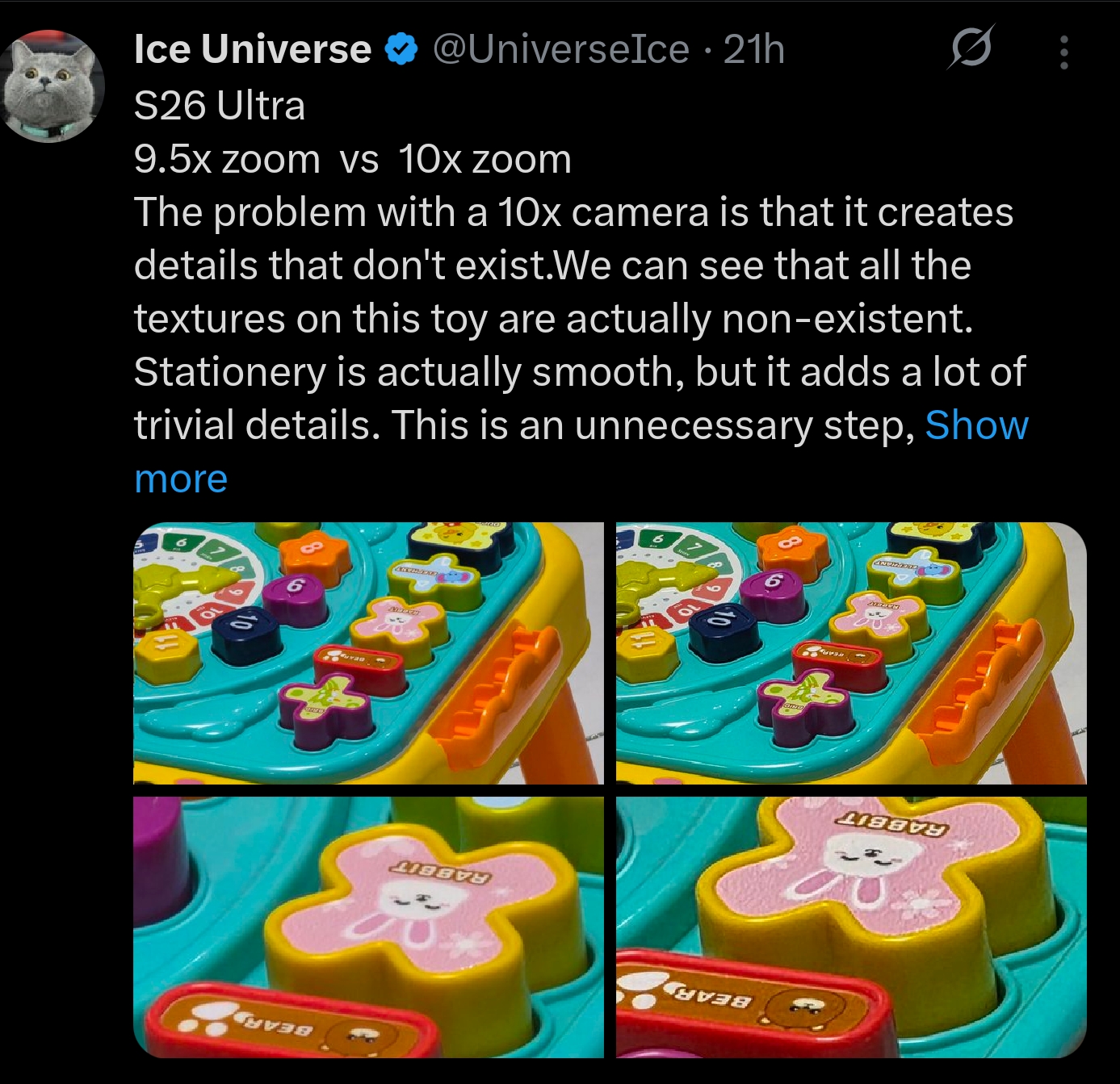
That raised a simple question: Is the camera actually behaving differently between these two zoom levels? After repeated shooting tests and careful crop comparisons, I noticed a clear pattern. The camera does change its processing pipeline when the zoom crosses 10x. However, this is not a universal zoom change, but rather a mode-dependent behavior tied specifically to the 24MP capture pipeline. Let’s break it down.
12MP Mode: 9.9x and 10x behave the same
On the Galaxy S26 Ultra, crossing the 10x mark actually changes the camera’s processing pipeline, but only when shooting in 24MP mode. This behavior is mode-dependent, not a general rule across all shooting modes. In 12MP mode, the behavior remains essentially the same. There is no visible difference between 9.9x and 10x zoom.
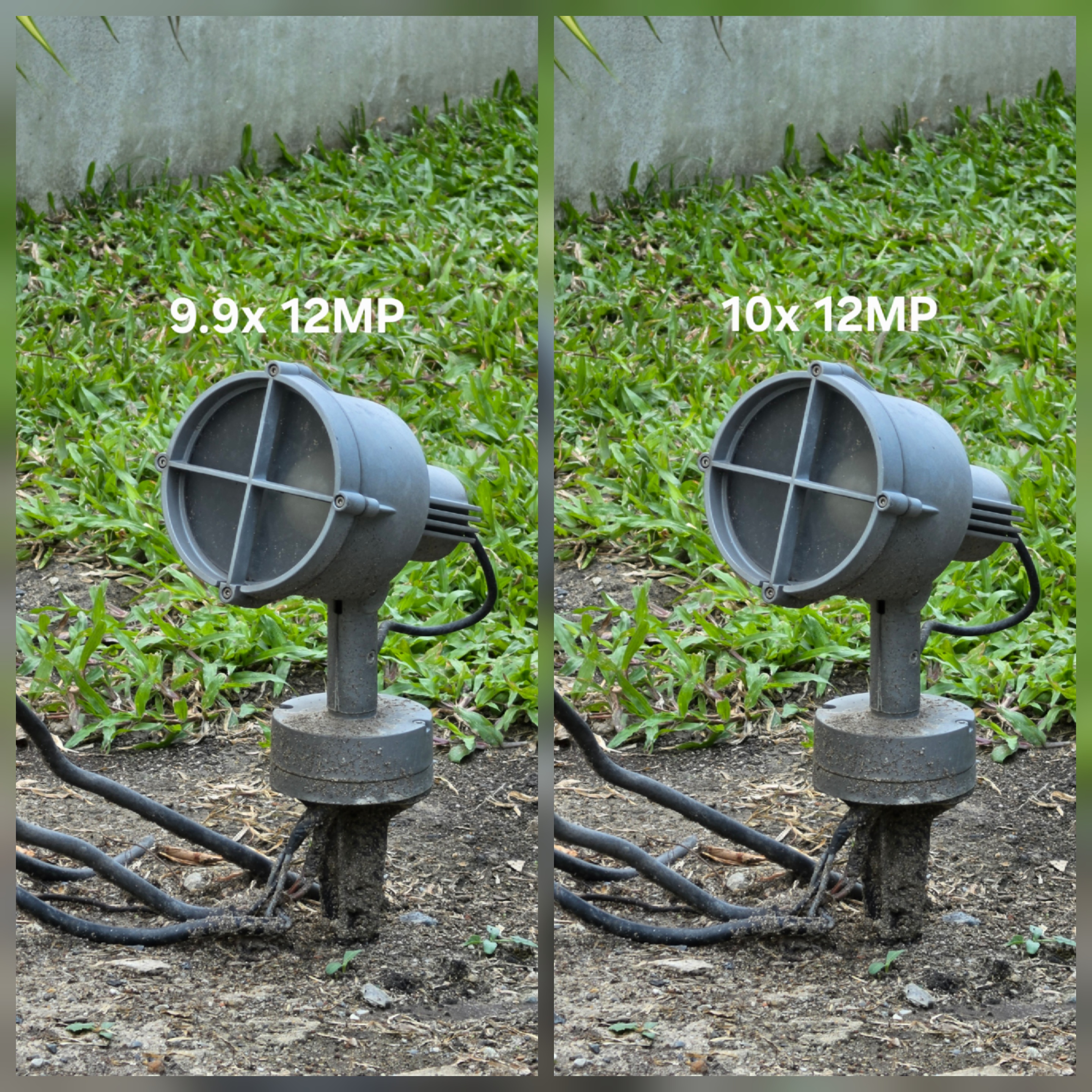
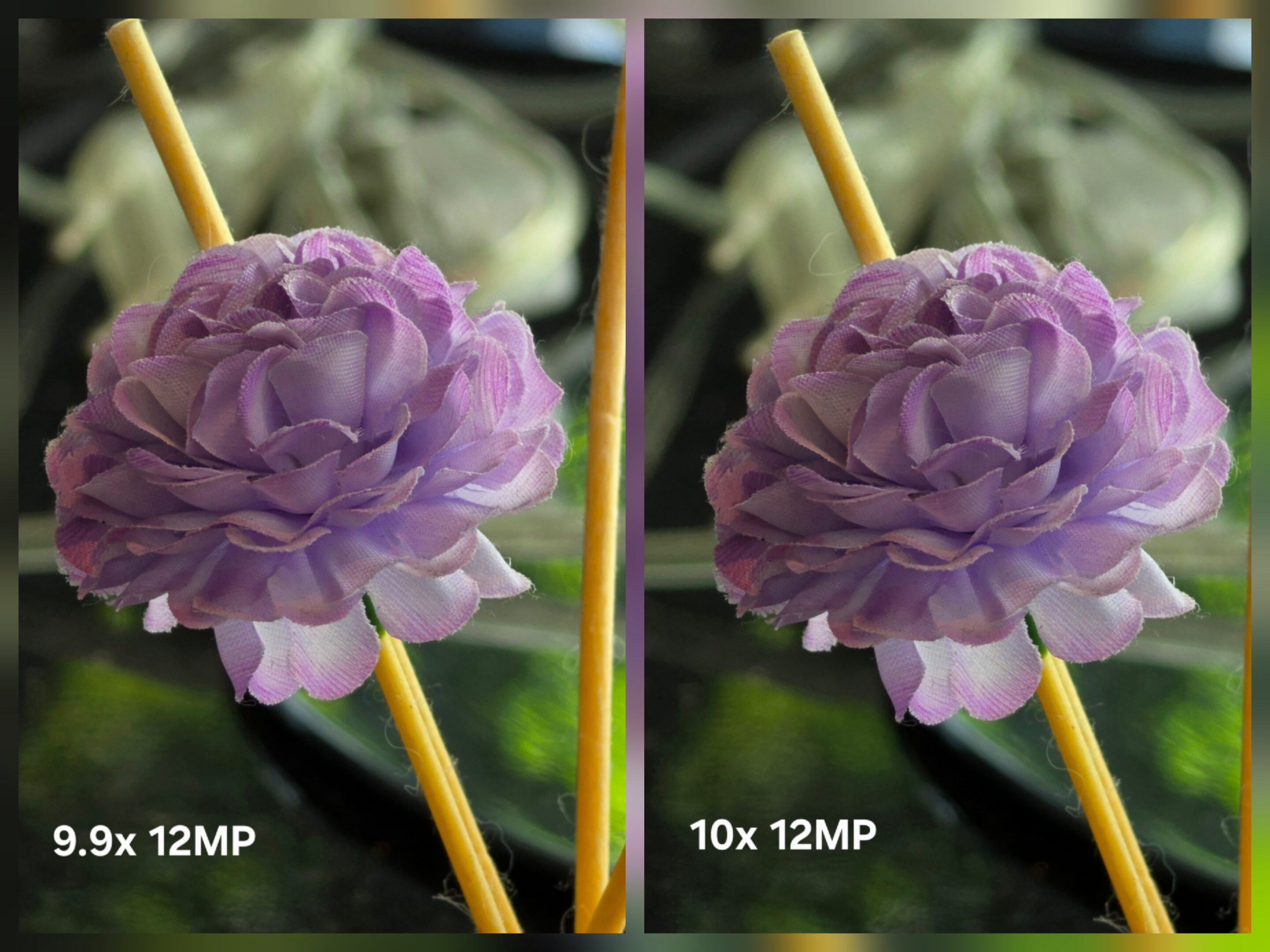
In practice, the camera is already operating within its long-range zoom processing system at this point. Because of that, the small numerical step between 9.9× and 10× doesn’t introduce any meaningful change in the final image. From a user perspective, the transition is completely seamless.
24MP Mode: Where things get interesting
The story changes once the camera is switched to 24MP mode. Here, testing shows that the zoom pipeline behaves differently depending on the zoom range.
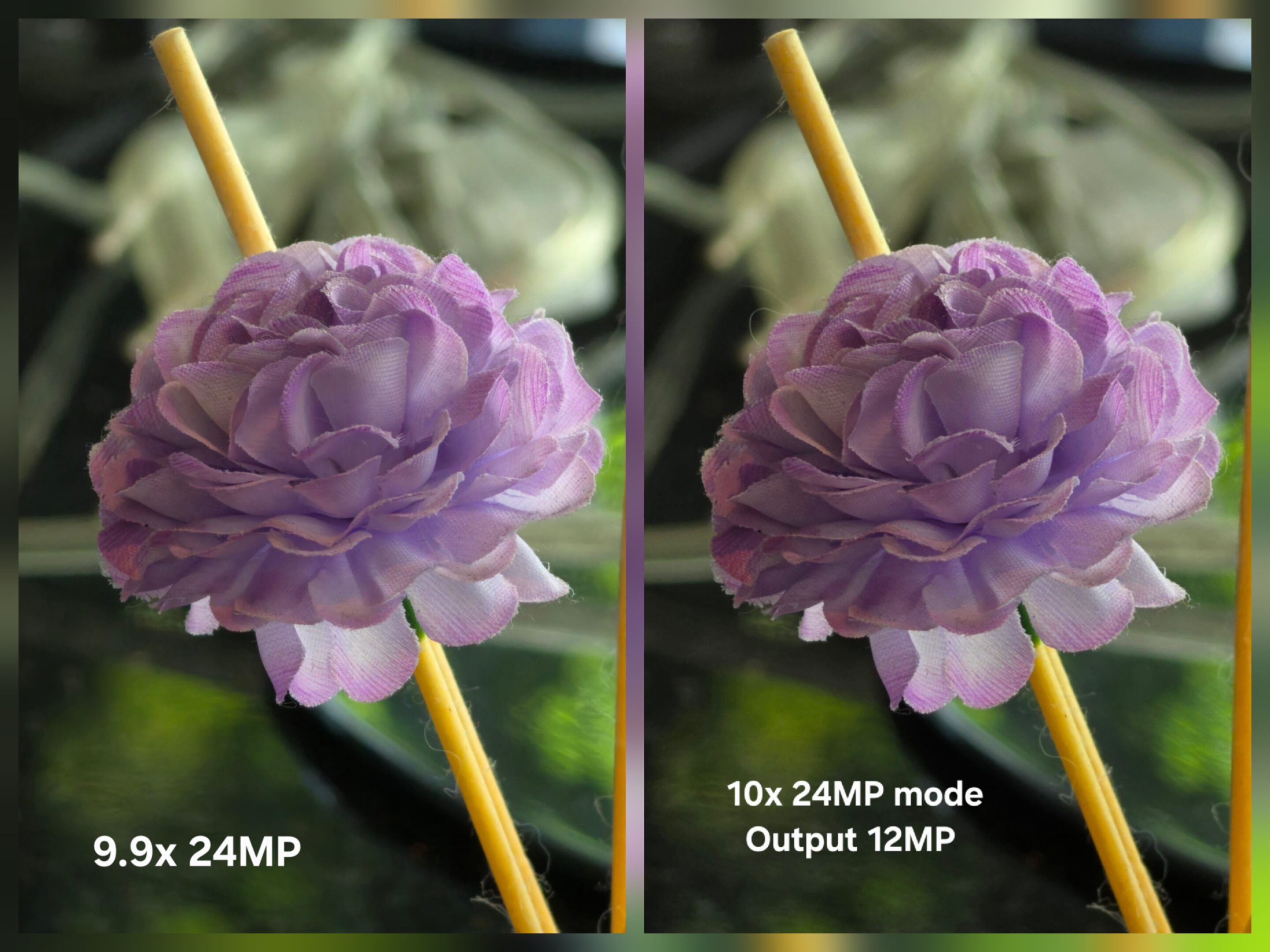
And this is where the camera quietly reveals something interesting. From 5x to 9.9x, the camera maintains:
- Full 24MP output
- a high-resolution crop from the 5× telephoto sensor
- minimal long-range AI reconstruction
- natural texture rendering
Because the 24MP pipeline remains active, most of the image detail comes directly from sensor data rather than heavy computational reconstruction. In practical terms, the camera is still working with the high-resolution crop pipeline.
But the moment the zoom crosses 10x, the system changes strategy. At this point, the camera:
- switches to 12MP output
- activates Samsung’s long-range zoom processing
- applies stronger AI detail reconstruction
- increases computational sharpening
The priority now shifts toward extreme zoom reach, allowing the camera to maintain usable detail at very long distances.
Why 9.9x becomes an important threshold
Because of this internal transition, 9.9x effectively becomes the highest zoom level that still preserves the full 24MP capture pipeline. Based on repeated shooting tests and crop comparisons, the processing change appears to occur exactly when the zoom crosses the 10x threshold in 24MP mode. This creates a small but technically important distinction:
- 5x → 9.9x high-resolution sensor crop 24MP output
- 10x → 100x computational long-range zoom 12MP output
From a photographic perspective, this behavior effectively creates a hidden high-resolution zoom window. Between 5x and 9.9x, the camera behaves very close to a near-lossless zoom range. Within this window, the image keeps full 24MP resolution, detail comes primarily from sensor data, and computational reconstruction remains limited
For photographers who prefer maximum native detail, this range becomes particularly interesting. It allows the camera to extract the most information possible from the telephoto sensor before the long-range AI system takes over.
Another interesting detail is that this 5x to 9.9x window also applies in Expert RAW, where the camera continues to capture 24MP data in this range. This allows photographers to benefit from true RAW flexibility, while Auto mode users can still take advantage of the same high-resolution pipeline through HEIF or JPEG output
Why does the camera switch the pipeline at 10x
Once the zoom crosses 10x, the camera transitions to Samsung’s long-distance zoom pipeline. This stage typically relies on techniques such as multi-frame super-resolution, AI texture reconstruction, stronger computational sharpening, and normalized 12MP output.
These methods help maintain clarity when photographing very distant subjects, but they also introduce a more computationally enhanced look compared to the high-resolution crop pipeline used below 10x.
For most users, this transition will remain completely invisible because the camera manages it automatically. But for photographers who prefer natural detail with minimal computational intervention, understanding this behavior can be useful. Up to 9.9x in 24MP mode, the Galaxy S26 Ultra offers the greatest native detail available from the telephoto sensor. Once the zoom crosses 10x, the camera shifts toward AI-assisted long-range zoom, prioritizing reach over native resolution.


Follow us on Google Discover & set us as a preferred source in Google News
Share this Post
___________________________


New Blog Posts
___________________________
Galaxy M08 and Galaxy F08 Spotted in Wi-Fi Alliance Database
Two more phones on the way
Save $700 on Samsung’s 49-Inch Odyssey OLED G9 Gaming Monitor
A discount so good doesn’t come around often
Samsung’s 75-Inch 4K Smart TV Is Just $399 Right Now
Size matters, and so does your hard-earned money