Here’s How Android’s Screen Reactions Feature Works

Last month, Google announced Screen Reactions, a new Android feature that lets you record yourself and your screen at the same time. The feature has now made its way to the latest Android Canary build, giving us an early look at its functionality ahead of a general public release. Samsung Galaxy phones are expected to receive it with the One UI 9 update.
Screen Reactions aims to help you create reaction videos quickly
When creating reaction videos, you usually need to rely on multiple apps. The steps involve recording your screen separately, capturing your reaction using the selfie camera, and then combining both clips with the editing tool. While this gets the job done, the workflow is time-consuming.
Thankfully, Google now aims to address this problem with Screen Reactions. The feature lets you “overlay your authentic response directly onto trending clips, wild comment sections or your latest gift guide.” While the company has not explained how the feature works, the Android Canary 2606 gives us a pretty good idea (via Android Authority).
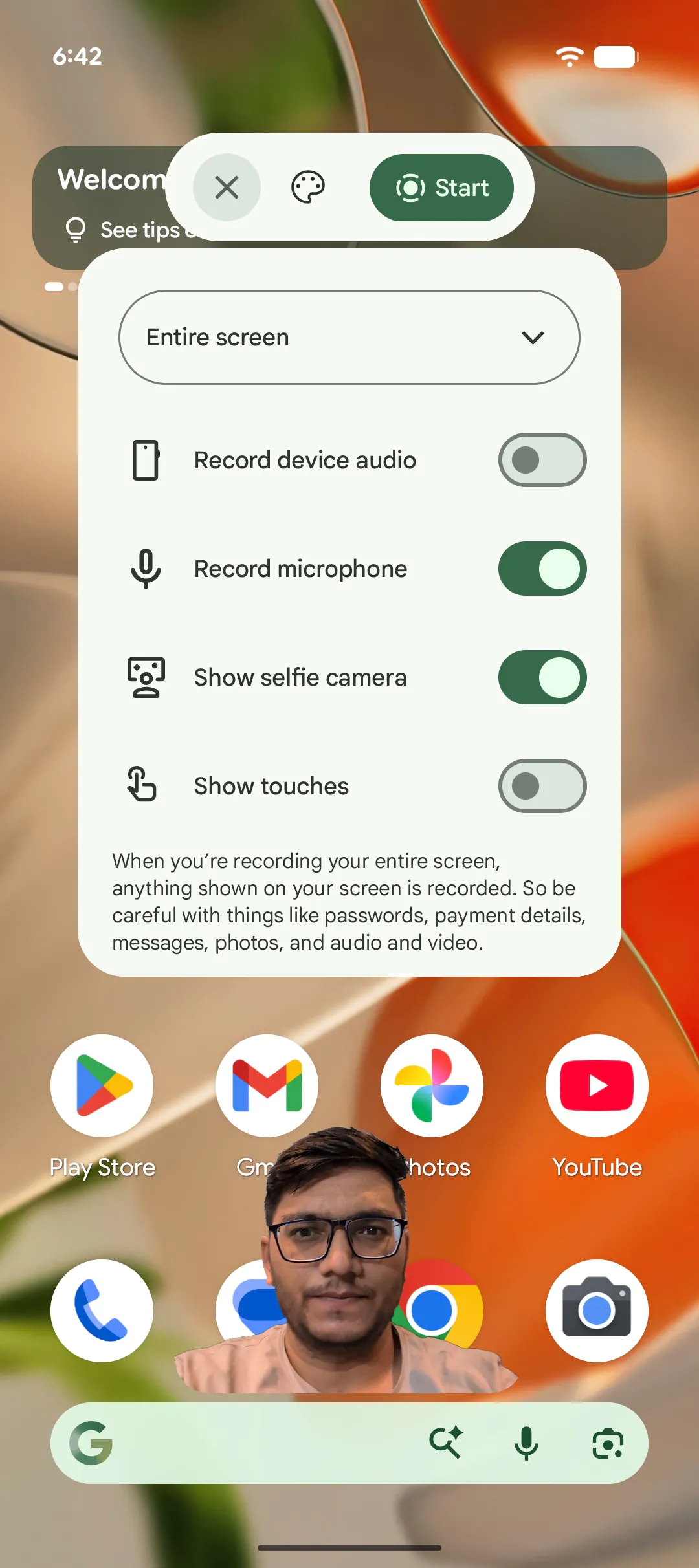
To access Screen Reactions, you will need to start a screen recording and select the “Entire screen” option. However, the feature shows up with “Selfie camera” branding within the recording interface. It’s unclear whether Google plans to keep this name or switch to the Screen Reactions branding later.
Once you turn on the “Selfie camera” toggle and start recording, the system captures both your screen and your front camera feed simultaneously. The camera footage is then overlaid onto the screen recording, allowing you to create reaction videos quickly.
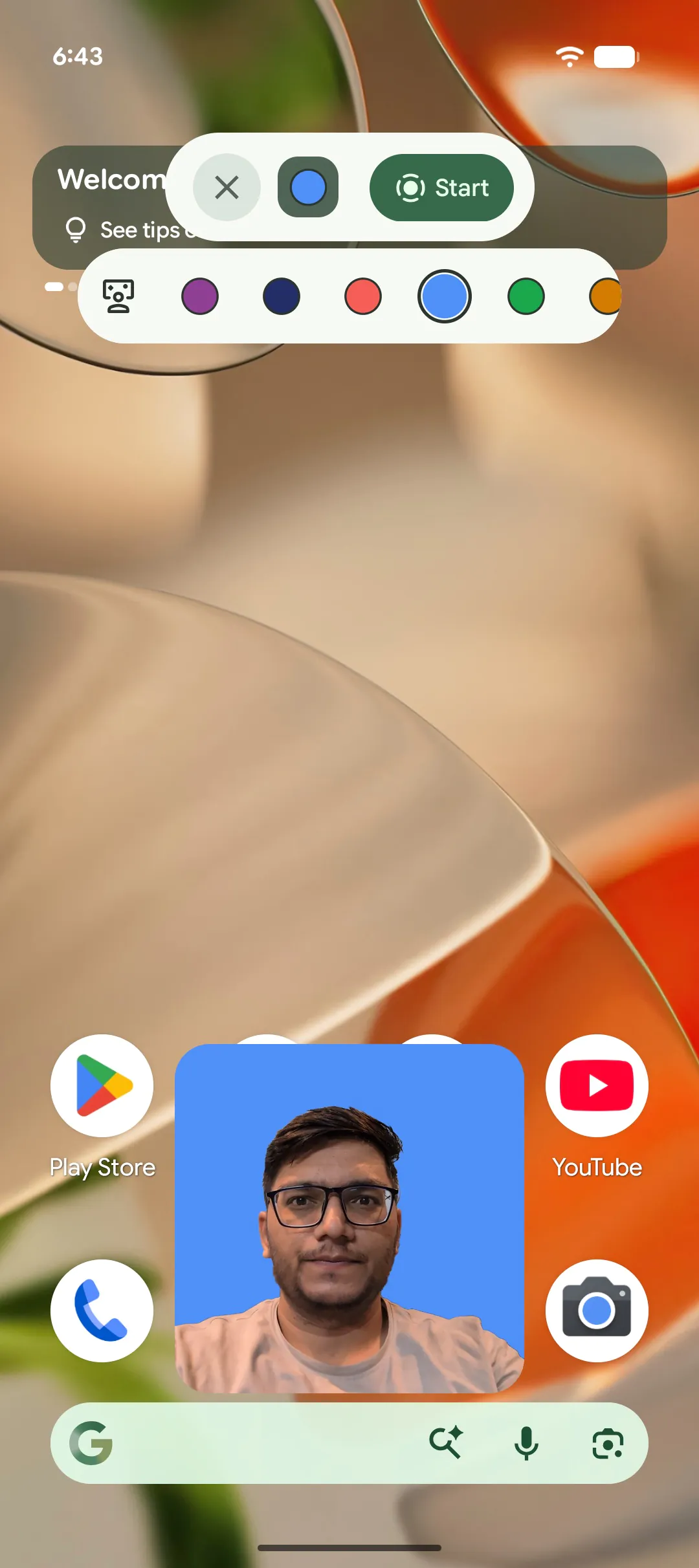
By default, the camera overlay uses a transparent background for a cutout effect with the content on your screen. However, if you want a distinct overlay, you can pick from six different background colors. Note that when recording a single app, the “Selfie camera” option disappears.
Google has promised to roll out this feature first on Pixel devices this summer. It wouldn’t be surprising to see Samsung Galaxy phones pick it up as well in the stable Android 17-based One UI 9, expected to debut alongside the next-gen Galaxy foldables on July 22.

Follow us on Google Discover & set us as a preferred source in Google News
Share this Post
___________________________


New Blog Posts
___________________________
Galaxy S21 FE Gets New Update, but One UI 8.5 Remains Missing
The Fan Edition handset may not get One UI 8.5
Computex 2026 | Jensen Huang Stops By Samsung Display Booth, Signs OLED Panel
Jensen Huang visits Samsung Display booth at Computex
Samsung Brings New Health Features to Galaxy Watch
The company will first introduce the features on its upcoming Galaxy Watch models