Computex 2026 | Samsung’s Ultra Slim OLED Panels Could Make Future Laptops Thinner
SammyGuru is reader-supported. We have affiliate and sponsored partnerships, so we may earn a commission when you buy through links on our site — at no extra cost to you. Learn more.
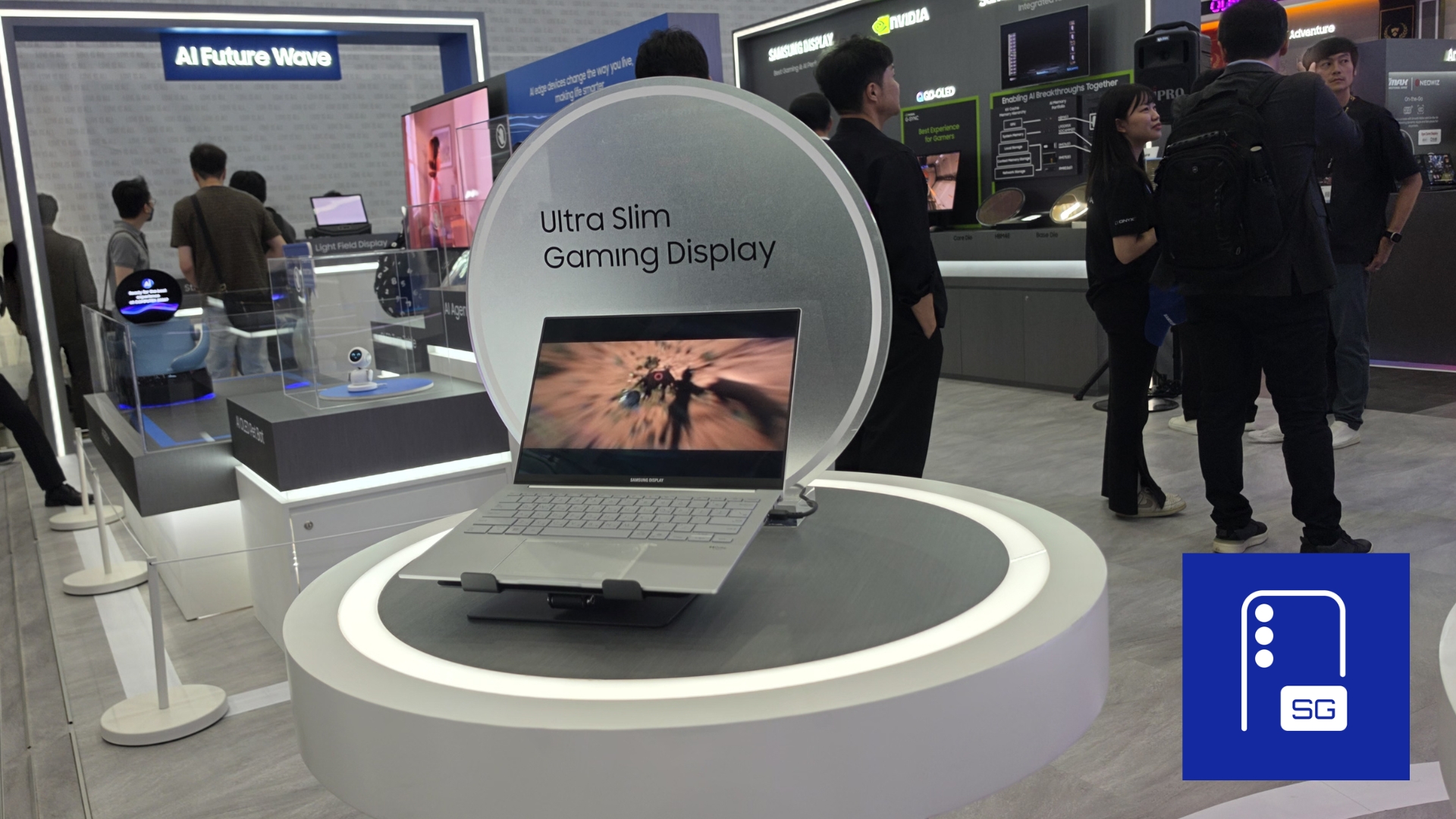
Samsung is back at it again, and this time, we’re seeing it live from the show floor at Computex 2026 in Taipei. The company’s display division is showing off its latest laptop OLED tech, and the big talking point is the “Ultra Slim” panel. It pushes the envelope on design and portability.
We check out Samsung’s Ultra Slim OLED panel at Computex 2026
Currently in development, Samsung Display’s Ultra Slim panel trims outer-edge thickness by over 20% compared to its existing mass-produced OLED panels. That in itself is no small feat for laptops. As Samsung explains, the company pulled this off by etching both the TFT substrate glass and encapsulation glass, cutting their thickness by more than 30%.
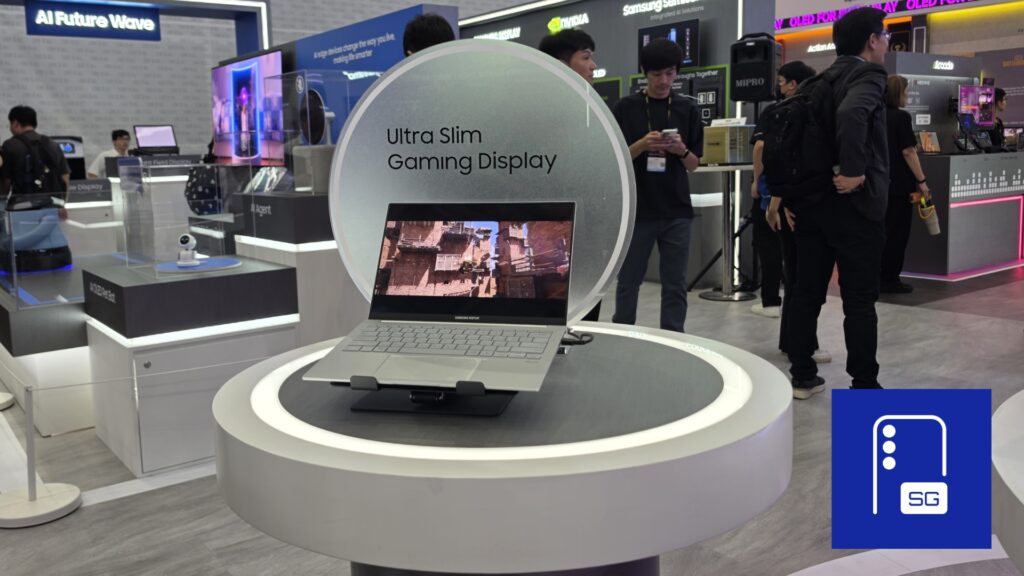
Going thinner usually opens a can of worms, especially with durability, but Samsung says it has tackled potential warping using its own process know-how. The end result, as we see, is a sleeker panel that gives manufacturers more breathing room with design while also making devices easier to carry around.
It delivers OLED’s signature deep blacks and quick response times. In particular, Samsung Display seems quite bullish on gaming right now. Laptops using these panels can reach the True Black 1000 tier, which makes a big difference in real life. It can hit extreme-low black levels as well.
As far as specs go, refresh rates range from 165Hz, which is already a sweet spot for gaming, up to 240Hz. The 240Hz is currently the ceiling for laptop OLEDs in mass production.
Speaking to SammyGuru, Samsung confirmed that these panels are currently under development. As such, there’s no timeline for mass production or commercial availability. Realistically, panels at this stage tend to show up in shipping devices 6-12 months later, sometimes longer if yields or durability need work. So, maybe we’ll see something next year.

Written by
Abhinav AnandAbhinav Anand is the News Editor at SammyGuru and a technology journalist based in New Delhi. Before joining SammyGuru, he contributed to numerous outlets, including Android Headlines, ExtremeTech, The Mac Observer, Financial Express, Economic Times, iGeeksBlog, KnowTechie, PhonesWiki, SlashGear, and more. You can reach him at [email protected].

Follow us on Google Discover & set us as a preferred source in Google News
Share this Post
___________________________


New Blog Posts
___________________________

Samsung Adds Supergirl Collection to Art Store With Big Giveaway
Samsung pushes Supergirl launch with art, TVs, and giveaways

Samsung Secures Apple’s Nod to Make Foldable iPhone OLED Modules
This comes after the display maker proved its production quality
Galaxy S26 Ultra Hits Lowest Price in the US for Prime Day
Now’s the best time to buy the Galaxy S26 Ultra