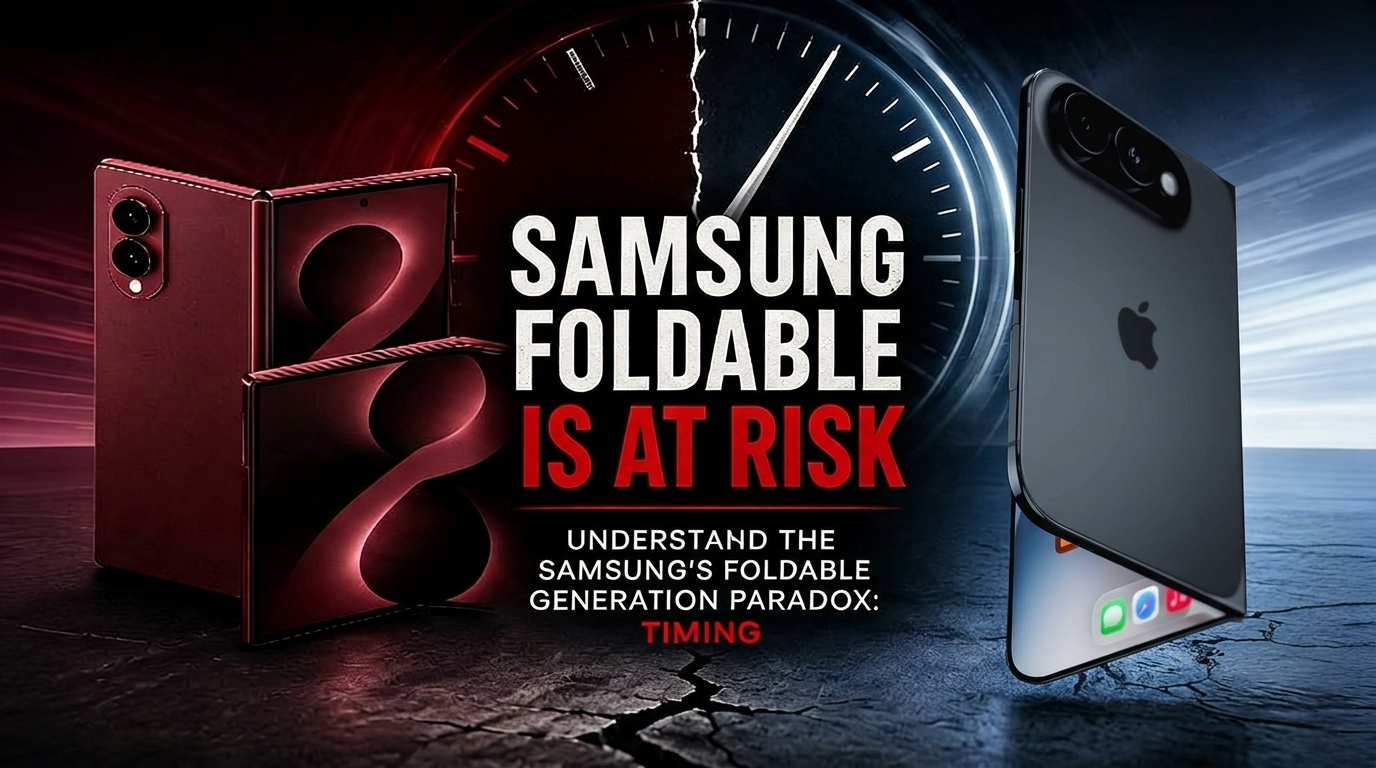
Samsung’s Foldable Problem: When Timing Itself Becomes the Disadvantage
SammyGuru is reader-supported. We have affiliate and sponsored partnerships, so we may earn a commission when you buy through links on our site — at no extra cost to you. Learn more.
Most conversations about the smartphone upgrade cycle focus on cameras, design refreshes, or software features. But there is one event that consistently marks the real beginning of a new generation: the SoC. And this is why Samsung’s foldable launch timing is a huge disadvantage.
What a Generation Actually Means
The SoC is not simply another component inside a smartphone. It is the platform upon which the entire device is built. New CPU and GPU architectures set both the performance ceiling and the efficiency floor. New AI engines define what software experiences are even possible on that hardware. An updated ISP directly shapes photography and video behavior in ways that software processing alone cannot replicate. Improved memory controllers, modem generations, display pipeline support, and computational capabilities all trace back to the same source.
When a new SoC generation arrives, it doesn’t just make a smartphone faster. It resets what the smartphone is capable of becoming through future software updates, camera improvements, and platform-level features. That distinction between performing better today and enabling more tomorrow is what separates a genuine generation transition from an incremental upgrade. Hardware performance benchmarks capture part of the story. The part most people miss is what the new silicon makes possible that the previous generation simply cannot access.
The Global Cycle Runs September to September
The global smartphone SoC cycle has operated on a consistent rhythm for years, and its anchor point is September. Apple’s annual iPhone launch established this cadence more firmly than any other product in consumer technology. Each September, a new A-series generation arrives, and with it, a reset of expectations across the entire premium smartphone market.
Qualcomm’s Snapdragon Summit, the company’s annual event for unveiling its next flagship mobile platform, runs in the same window, introducing the next Android flagship platform within weeks of Apple’s own chipset reveal. Two events, one month, one generation shift.
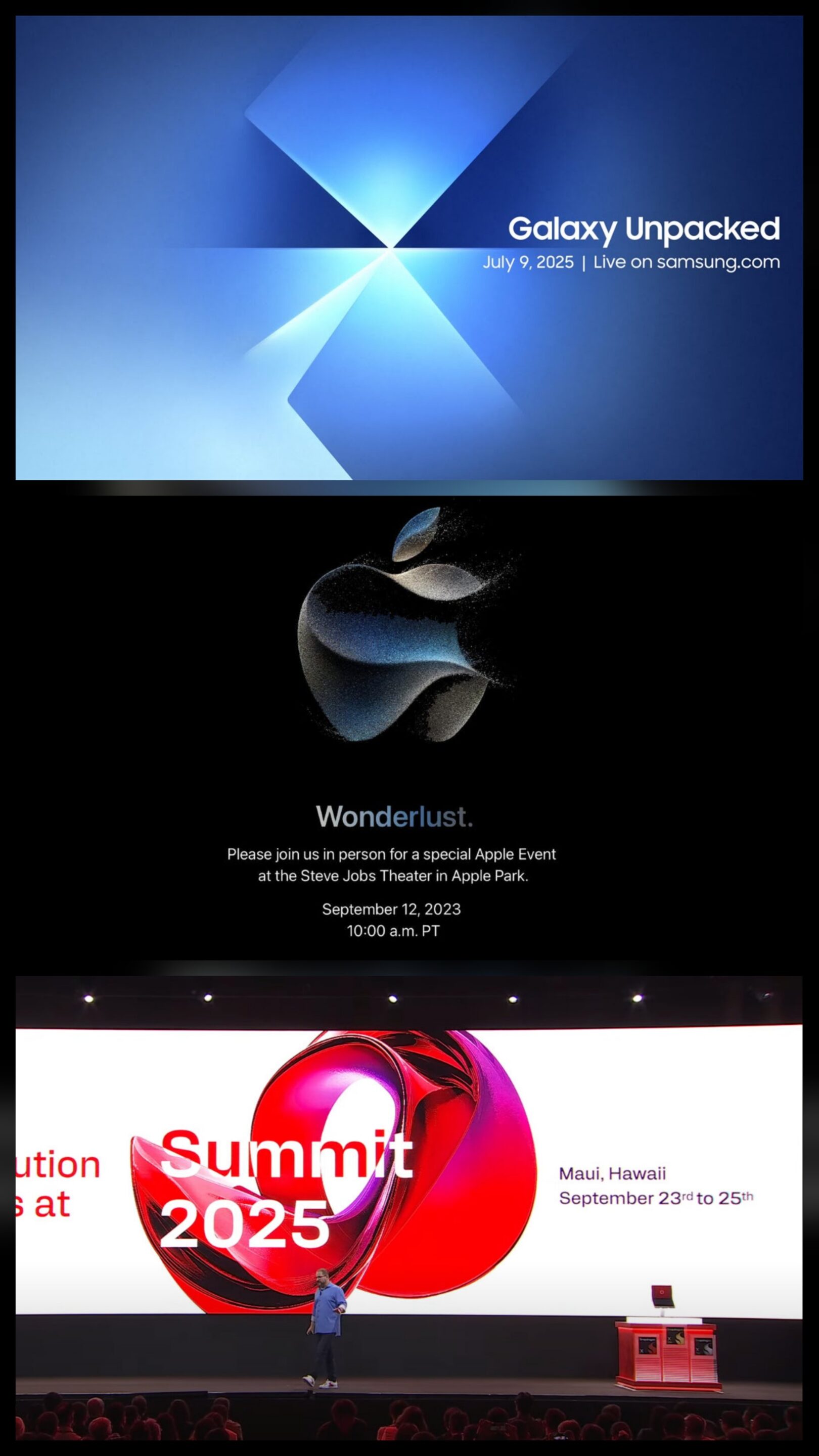
From that September starting point, the Android ecosystem deploys the new platform in waves. Chinese flagship manufacturers typically release their first Snapdragon device, usually a Pro-tier model, in October or November. Ultra variants, often the most capable hardware in each manufacturer’s lineup, tend to follow in March or April. The specific launch dates vary across brands, but the underlying generation is consistent: same SoC, same technological foundation, same window.
A device launching in October and a device launching in April may carry different cameras and different software, but they both represent the same generation. The cycle completes roughly from September to September, with the next Snapdragon Summit and the next iPhone generation arriving as the bookends of the same year-long wave.
Samsung’s January Cadence
Samsung’s relationship with this global calendar is intentional but distinctly shifted. The Galaxy S series launches in January or February, carrying either Qualcomm’s latest Snapdragon flagship in a specialized variant or Samsung’s own Exynos platform. For the Galaxy S26 Ultra, that meant arriving with Snapdragon 8 Elite Gen 5 roughly four to five months after the first Android devices deployed the same platform.
That gap is real, but the S series still comfortably belongs to the same generational window as most of its Android competition — it arrives early in the same wave, not after it has passed.
The Exynos side of Samsung’s portfolio runs a parallel path. An updated Exynos generation typically emerges toward the end of the year, deployed across base and plus-tier Galaxy models before Samsung evaluates whether to extend that platform upward in the following year.
Whether Snapdragon or Exynos, the pattern holds across the entire lineup: Samsung’s flagship portfolio for any given year runs on the same silicon generation from the Galaxy S launch in January through to the last major device of the year. One platform. One year. One consistent technological foundation from first product to last.
The last product of that year is the foldable.
The Foldable Timing Exposure
Samsung’s foldable lineup arrives at the summer Unpacked event, typically in July or August. On paper, this sounds reasonable — the Fold and Flip launch only months after the Galaxy S series, carrying the same current-generation silicon, representing Samsung’s most refined hardware at that point in the year. But the silicon generation doesn’t follow Samsung’s product calendar. It follows its own.
There is also a broader hardware pattern worth understanding here, because it extends well beyond the SoC alone. Samsung’s approach has consistently followed a clear internal sequence: the Galaxy S Ultra introduces new camera hardware alongside a new silicon generation. The Fold and Flip then inherit that same SoC and that same camera foundation later in the year.
Whatever new camera hardware, sensor technology, or imaging capability Samsung has reserved for the following S Ultra cycle does not appear in the current Fold. It never does. The foldable inherits the generation that the S Ultra introduced; it does not preview the one that comes next.
This is not an accidental outcome. It reflects a deliberate product architecture that Samsung has followed consistently across multiple generations. The consequence is that the foldable arrives as the most refined expression of a current generation rather than the leading edge of an incoming one. That distinction defines its market position from launch day onward.
A Galaxy Fold launching in July or August 2026 carries Snapdragon 8 Elite Gen 5, the same platform that Chinese flagship devices first deployed in October 2025. By the time Samsung’s newest foldable flagship reaches consumers, that SoC has already been available in competing Android hardware for roughly nine months.
More importantly, just four to six weeks after Samsung’s summer Unpacked, Apple announces the next generation. A new A-series chip. A new iPhone lineup. The opening chapter of an entirely new cycle. Samsung’s newest foldable is barely off the shelf, and the industry’s attention has already started moving forward.
Eleven Months With Nowhere to Go
Samsung’s foldable, launched in July or August, must represent its premium offering for approximately eleven months before a successor arrives. During that window, the competitive landscape doesn’t pause. Apple’s fall announcement introduces next-generation silicon alongside new AI capabilities, imaging advancements, and platform-level features that help define the next stage of the smartphone cycle. Chinese manufacturers follow shortly, releasing their first devices built on the latest Snapdragon platform.
By the time Samsung’s foldable is four or five months old, it is being compared against products that represent a newer technological generation, and that comparison window only widens as the months continue.
For the Galaxy S series, this dynamic is significantly more manageable. The gap between an iPhone 18 Pro in September 2026 and a Galaxy S27 Ultra in January or February 2027 is roughly four to five months. Meaningful, but navigable, and the S27 Ultra arrives as a genuine next-generation response.
The foldable has no equivalent relief. The same device that launched in one generation must absorb an entire generation transition in its competition, with no hardware response available until nearly a year later. That asymmetry between the S series and the foldable is where the timing problem becomes structurally visible.
The Comfort Zone Is Ending
Samsung’s ability to absorb this timing disadvantage has historically rested on one critical factor: the state of foldable competition. For years, the premium foldable market was largely Samsung’s to control. Huawei produced technically impressive foldable hardware, but global reach remained constrained by ongoing trade restrictions. OPPO, Vivo, and Honor also built compelling devices, but struggled to match Samsung’s international distribution infrastructure.
The result was a competitive environment where Samsung’s timing misalignment was a theoretical concern rather than a practical one because no competitor existed to fully exploit it.
Apple’s entry into the foldable segment removes that insulation entirely. Unlike any previous foldable competitor, Apple has no global reach problem, no distribution deficit, and no recognition gap to overcome. More importantly, it launches at the precise moment a new silicon generation begins.
An Apple foldable arriving in September would carry that generation’s silicon from day one, represent the opening chapter of the new cycle, and arrive with Apple’s complete software ecosystem and retail infrastructure behind it. That is a fundamentally different competitive scenario than anything Samsung’s foldable lineup has faced before. Samsung’s current launch calendar was not designed with that scenario in mind.
Three Paths, One Key Variable
The timing problem has no simple resolution, which is why the paths forward are worth examining individually. Moving the foldable launch to October would place it immediately after the Qualcomm Snapdragon Summit, allowing Samsung to adopt next-generation silicon roughly in line with the first wave of Chinese competitors. The operational and supply chain complexity of achieving that shift would be considerable, but it would meaningfully reduce the generational exposure.
Moving foldables earlier, into April alongside the mid-year refresh window, creates greater calendar separation from Apple’s fall cycle, though it also places the device earlier in its generation rather than delivering the full maturity of that platform.
The most strategically significant variable, however, is Exynos. If Samsung develops a competitive flagship-tier Exynos platform capable of powering future foldable devices, what it gains is considerably more valuable than a performance advantage: it gains independence from Qualcomm’s release schedule.
A Samsung-controlled silicon roadmap means Samsung-controlled launch timing. The foldable could ship when Samsung’s product strategy calls for it, built on a platform developed on Samsung’s own timeline rather than one dictated by Snapdragon Summit.
This is where the Exynos 2600 becomes worth examining more closely. It represents Samsung’s first flagship step into the 2nm era and introduces Heat Path Block (HPB), a thermal architecture approach designed to improve sustained performance by managing heat distribution at the silicon level rather than simply throttling the chip under load.
Reports suggest similar thermal-management approaches may appear in future Snapdragon platforms. When a technology pioneered in one chipset ecosystem begins appearing in the other, it generally reflects a genuine engineering advancement rather than a proprietary claim.
If Exynos 2700 builds on that 2nm foundation as a second-generation platform, an important question emerges: could it become the point where Samsung has enough confidence in its own silicon to power its foldable flagship without compromise? Whether Exynos can reach that competitive threshold remains genuinely uncertain, but the strategic case for achieving it has rarely been clearer than it is right now.
The Timing Is Now the Product
The fundamental challenge Samsung faces is not whether it can build a great foldable. It has already demonstrated that it can. The challenge is whether a foldable launching in July or August, representing the final flagship of one silicon generation, can hold its competitive position against devices that increasingly arrive representing the first flagship of the next one.
For the Galaxy S series, the generational gap measures in months and resolves quickly. For foldables, it stretches close to a full year, with no hardware response available in between. It becomes a genuine structural vulnerability when a competitor launches new products precisely when the generation resets, sells everywhere Samsung sells, and carries no disadvantage in brand recognition, software depth, or after-sales support.
In consumer technology, timing has always mattered. What is changing is how it matters, not just as a product roadmap consideration, but as something that shows up directly in customer comparisons. The generation cycle has always moved forward on its own schedule. The question now is whether Samsung’s foldable calendar is still moving with it.
Related Deals



Follow us on Google Discover & set us as a preferred source in Google News
Share this Post
___________________________


New Blog Posts
___________________________

Galaxy Tab S9, S10, S11 and More Tablets Receive June 2026 Update
Samsung brings its June 2026 update to several Galaxy Tab models

June 2026 Google Play System Update: What’s New?
The update brings improvements to Android’s core services
Samsung OLED TVs Earn Top Ranking in US Consumer Reports
This highlights the firm’s strong position in the premium TV market