Samsung Is Removing Vascular Load from Galaxy Watches in the US
SammyGuru is reader-supported. We have affiliate and sponsored partnerships, so we may earn a commission when you buy through links on our site — at no extra cost to you. Learn more.
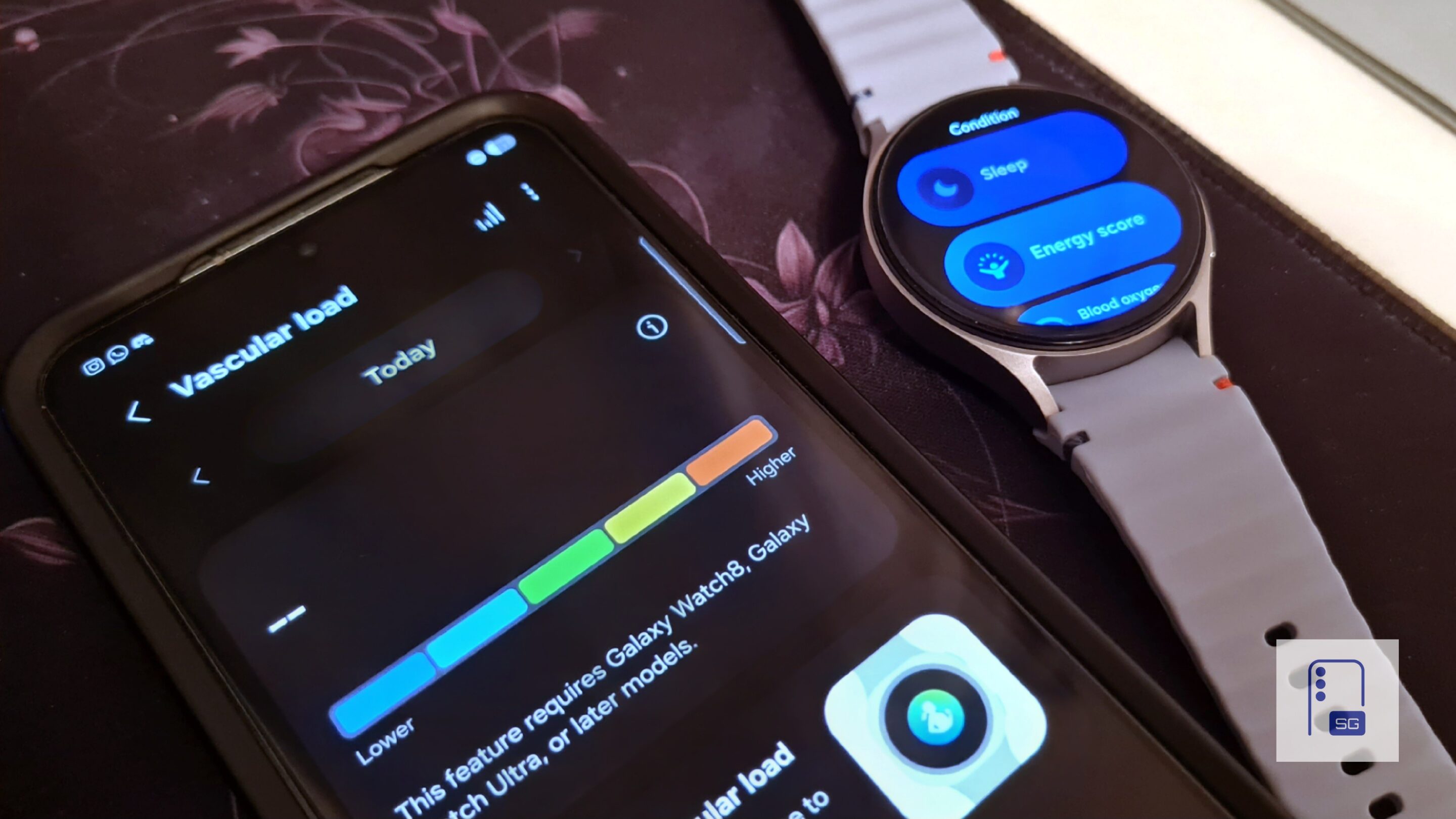
After Samsung’s latest UI and features update on Samsung Health, Samsung is also preparing another health-related change for Galaxy Watch users in the US.
Vascular Load feature will be gone from the US starting with this month
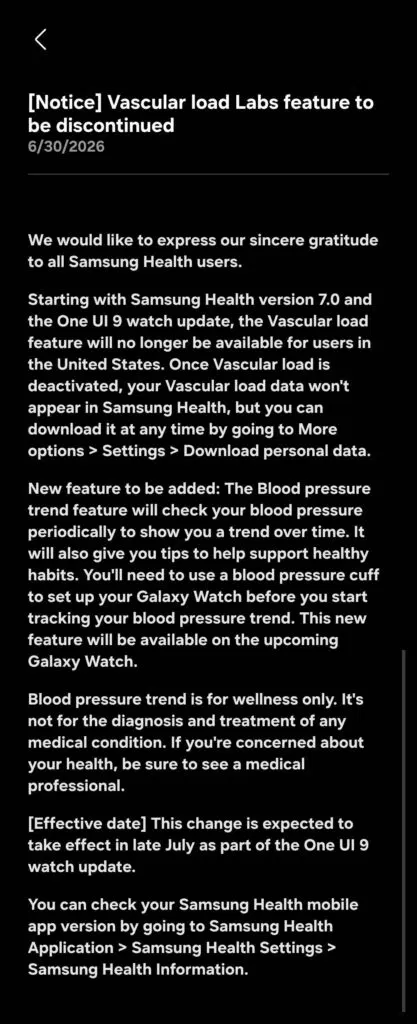
According to a notice from Samsung Health in the US, via u/Enjinr in the r/GalaxyWatch community on Reddit, beginning in July, the company will remove the standalone Vascular Load feature from supported Galaxy Watches. This is happening ahead of the rollout of Samsung Health 7.0. In addition, One UI 9.0 Watch will launch soon.
The notice reads:
“Starting with Samsung Health version 7.0 and the One UI 9 watch update, the Vascular Load feature will no longer be available for users in the United States. “
The company also confirms that existing Vascular Load records will disappear from Samsung Health once the feature is removed. However, users can still export their historical data in advance by navigating to: Samsung Health – More Options – Settings – Download personal data. Additionally, Samsung says the change will take effect in late July. This will happen alongside the One UI 9.0 Watch update.
This change comes just weeks after Samsung finally expanded Blood Pressure monitoring to Galaxy Watches in the US. This feature has been available in Europe since 2021 with the Galaxy Watch 4 launch. Later, older watches like Galaxy Watch 3 and Galaxy Watch Active 2 got the feature via a software update.
Blood Pressure Trend replaces it
The notice also reveals something new. Instead of Vascular Load, Samsung plans to introduce a Blood Pressure Trend feature in the US. According to Samsung’s notice, the new feature will periodically measure blood pressure readings over time and provide trend information together with wellness tips.
To use it, users will first need to calibrate their Galaxy Watch with a traditional blood pressure cuff. In addition, Samsung also reminds users that Blood Pressure Trend is for wellness purposes only. It cannot diagnose or treat medical conditions. They advise anyone concerned about their health to consult a medical professional.
Features such as Vascular Load and general sleep or stress tracking fall under Samsung’s wellness tools. Meanwhile, ECG and Irregular Heart Rhythm Notification (IHRN) are FDA-cleared medical features. The newly announced Blood Pressure Trend also carries a wellness disclaimer. Rather than serving as a diagnostic tool, it is just for wellness.
It could also be related to the new Heart Health Score metric
While there isn’t any official confirmation, some users on Reddit and I suspect that this decision could be because of the new Heart Health Score metric. This would make sense as to why it is removed. Instead of displaying vascular stiffness as a separate value that many users may not understand, One UI 9.0 Watch and the new Samsung Health combine multiple health indicators into a single Heart Health Score. In this way, things are simplified.
However, it still doesn’t make sense, since the Heart Health Score uses the Vascular Load data, alongside data from sleep, exercise, and BMI. Also, the notice clearly states that only the US will have the Vascular Load feature removed. Therefore, we need to wait for more details from Samsung itself. So, take this affirmation about the Heart Health Score with a pinch of salt.
A confusing situation
Interestingly, some Galaxy Watch users on Reddit have suggested that the standalone Vascular Load feature could be removed because of the FDA (Food and Drug Administration) approvals. But that’s clearly not the case. This feature worked before in the US without FDA approval. Why? Because Samsung marketed it as a wellness feature, rather than as a medical tool for your health. That’s why it worked in the US even without the FDA regulations. Samsung also advises people with diagnosed cardiovascular disease, heart failure, and other heart problems not to use the Vascular Load feature.
On paper, removing a feature might sound like a downgrade, and most of the time, it really is a downgrade. But in this case, Samsung isn’t removing the underlying technology. Instead, it could change how that information reaches users.
If Heart Health Score proves easier to understand while still using the same vascular data behind the scenes, most users probably won’t lose any meaningful functionality. Still, I highly suggest taking the probability of replacing the Vascular Load with Heart Health Score with a pinch of salt. Wait until Samsung officially gives more details. Maybe with the One UI 9.0 Watch rollout later this year.

Written by
David BuligaDavid Buliga is a Romanian writer at SammyGuru, where he covers the Samsung and Android ecosystem with a focus on apps, software features, and the trends shaping how we actually use our devices — from Galaxy Watch apps to One UI 9, plus the occasional opinion piece. He joined SammyGuru in 2026 after previously creating entertainment content on YouTube, producing animations and gameplay videos. Currently pursuing a Bachelor's degree in Applied Electronics and Telecommunications, David is passionate about consumer technology and enjoys getting under the hood of smartphones to see what makes them tick. Outside of tech, he loves listening to music, reading books, photography, and exploring the random ideas that often inspire his next story.

Follow us on Google Discover & set us as a preferred source in Google News
Share this Post
___________________________


New Blog Posts
___________________________
Galaxy A08 Picks Up Wi-Fi Alliance Certification
One more certification in

Samsung’s Premium Foldable Strategy May Be Right on Time
The future looks expensive
Plot Twist: Galaxy Z Flip 7 FE Is Actually a Great Deal Now
It finally lives up to the FE name