What Does “Ultra” Even Mean for Samsung Anymore?

When you think of the word “Ultra”, what comes to mind? Top-tier specs, innovative new features, ambitious decisions made to push the boundaries of what’s possible. The absolute best on offer. Samsung started with this mindset with the Galaxy S20 Ultra, bringing ambitious new hardware no Samsung device ever had before. But over time, the word “Ultra” has carried less and less weight. And Samsung’s latest makes that even worse.
What makes an Ultra… Ultra?
Fellow SammyGuru writer Fadhel wrote a piece about this very topic, and it’s well worth a read. But the TL;DR is this: Samsung’s cost-cutting and recycling of hardware and features have diluted the term “Ultra”. It’s no longer used to denote the most ambitious, most innovative devices. It’s simply the top of that product’s lineup. Safe to say, “Ultra” now signals price, and not capability.
Recent reports suggest Samsung’s upcoming foldables will be switching to a new product release strategy, Galaxy Z Fold 8 and Galaxy Z Fold 8 Ultra. The former is the long-rumored wide model, with a shorter, passport-like footprint. The latter will be the more traditional, square-shaped foldable we’re all used, and will succeed the Galaxy Z Fold 7 (review).
So what actually makes this new device Ultra? From what we know so far, not much. The new model is expected to get a battery bump to 5,000mAh, an upgraded 50MP ultrawide sensor, and the same Snapdragon 8 Elite Gen 5 processor found in the Galaxy S26 series. That’s it. No S-Pen compatibility, no anti-reflective coating, no 5x telephoto. Heck, it still has the same 3x telephoto sensor Samsung’s flagship devices have relied on for years.
“Ultra now signals price, and not capability”
Now, Samsung’s approach here makes some sense when you factor in the wider model. It’s expected to have a 4,800mAh capacity, swap the 200MP main sensor for a 50MP one, and ditches the 3x telephoto. It’s still premium, but not top tier. Samsung is using Ultra to signal the price and lineup positioning, and not the level of capability that users would typically expect with an “Ultra” device.
It still falls behind the Galaxy S26 Ultra (review) in terms of cameras and features, but makes up for it with the added flexibility of the foldable display.
What even is Ultra nowadays?
This is not the only scenario Samsung has used the term “Ultra” to signal price rather than capability. The Galaxy Watch Ultra is a prime example. It’s almost on par with the Watch 8 Classic (review), including extra function button. But the Ultra ditches the beloved rotating bezel in favor of a larger battery and more rugged design. The Tab S11 Ultra, meanwhile, mainly denotes a larger size, and is otherwise almost identical to the base Tab S11 in terms of features.
Now why am I going on about “Ultra” so much? Because it carries a lot of weight in the minds of the consumer, and Samsung knows this very well.
“Ultra” suggests the best of the best, better than the “Pro” phones of the competition. But in reality, it’s often the opposite.
Competitors are pulling ahead on hardware, with higher-res cameras using Samsung’s own sensor tech, larger and denser batteries, and increasingly aggressive pricing. On many other devices, “Ultra” means the most extreme cameras, fully maxed-out specs and the biggest possible battery. Samsung’s version of “Ultra” just doesn’t live up to that same standard.
Ultimately, Samsung should’ve picked a different name for the Fold 8 Ultra. Something like Fold 8 Pro or Fold 8 Edge would’ve been more fitting. Or better yet, keep the square fold on the standard naming scheme as the Fold 8, and brand the new wider model as something like Fold 8 Mini or Fold 8 Wallet.
So what do you think? Will the Fold 8 Ultra live up to its name? Stay tuned for any new developments.

Follow us on Google Discover & set us as a preferred source in Google News
Share this Post
___________________________


New Blog Posts
___________________________
Galaxy Devices That Have Received May 2026 Security Update
List of Galaxy devices that are receiving May 2026 security update
Samsung Galaxy Weekly Updates Roundup (June 8-14)
One UI 9 beta 3 for Galaxy S26 releasing next week
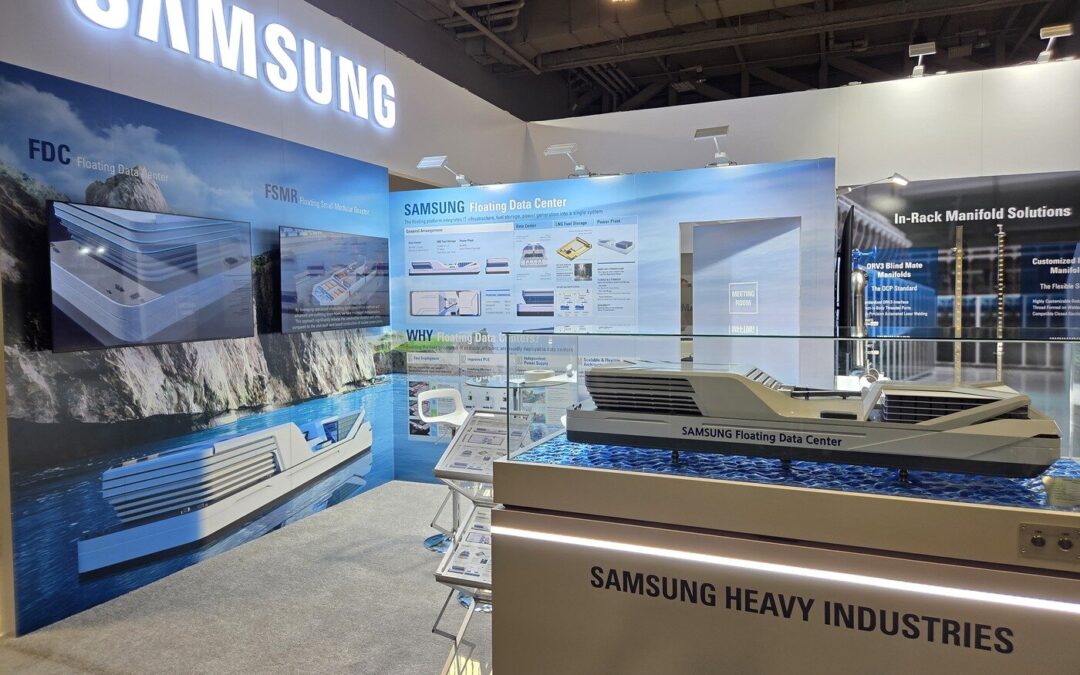
Samsung’s Shipbuilding Arm Pushes Floating Data Centers for AI Boom
Samsung is building ships designed to run AI data centers