How Galaxy S26 Ultra’s APV Codec Could Transform Mobile Filmmaking

The future of filmmaking may no longer depend on costly cameras thanks to Samsung’s Advanced Professional Video (APV) codec. The latest Galaxy S26 Ultra ships with this new technology to push mobile video closer to professional standards, preserving finer detail and greater color accuracy. The Korean firm has now shared how APV brings advantages over conventional codecs. Let’s dive into it.
APV technology brings mobile video closer to professional standards
Video can be split into two types: casual and professional. The former are the day-to-day clips that save space by compressing files. The latter are for serious editing and filmmaking, maintaining high image quality and accurate colors. Basically, standard compression makes it difficult to edit videos on mobile devices. Tasks such as color grading and applying visual effects (VFX) need high-quality footage. This is why Samsung developed the APV codec.
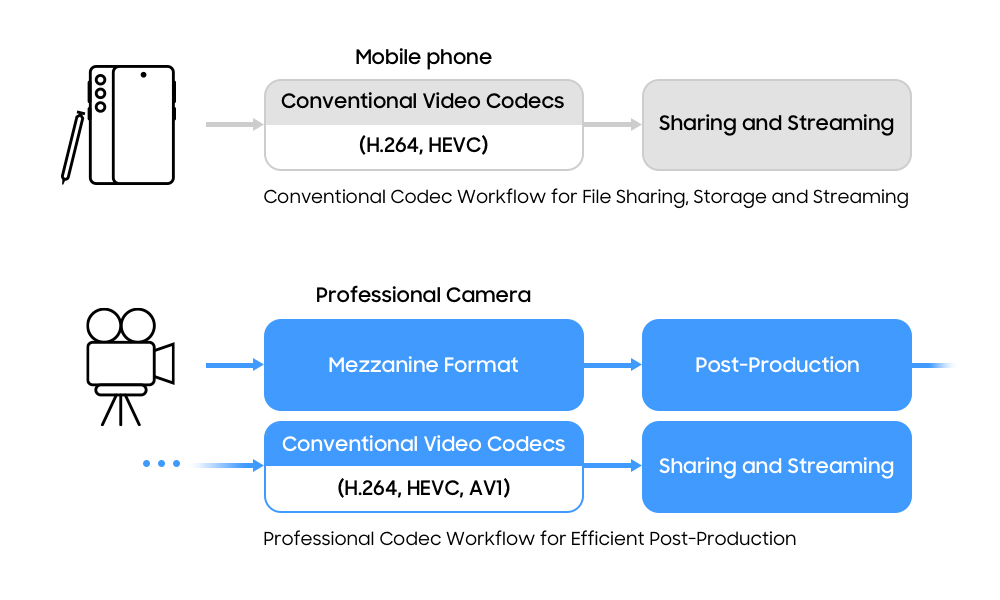
However, the biggest challenge was reducing complexity. Traditional professional video codecs prioritize image quality but require powerful hardware to process data. This makes them difficult to use on smartphones that come with limited processing power. To tackle this, the company introduced lightweight entropy coding and frame tiling. The former reduces computational load while the latter allows parallel encoding and decoding.
Samsung says APV can handle real-time processing of up to 8K video on mobile devices. The best thing is that even after multiple edits, the codec can maintain high image quality with minimal loss. The table below shows a comparison between conventional and APV codecs.
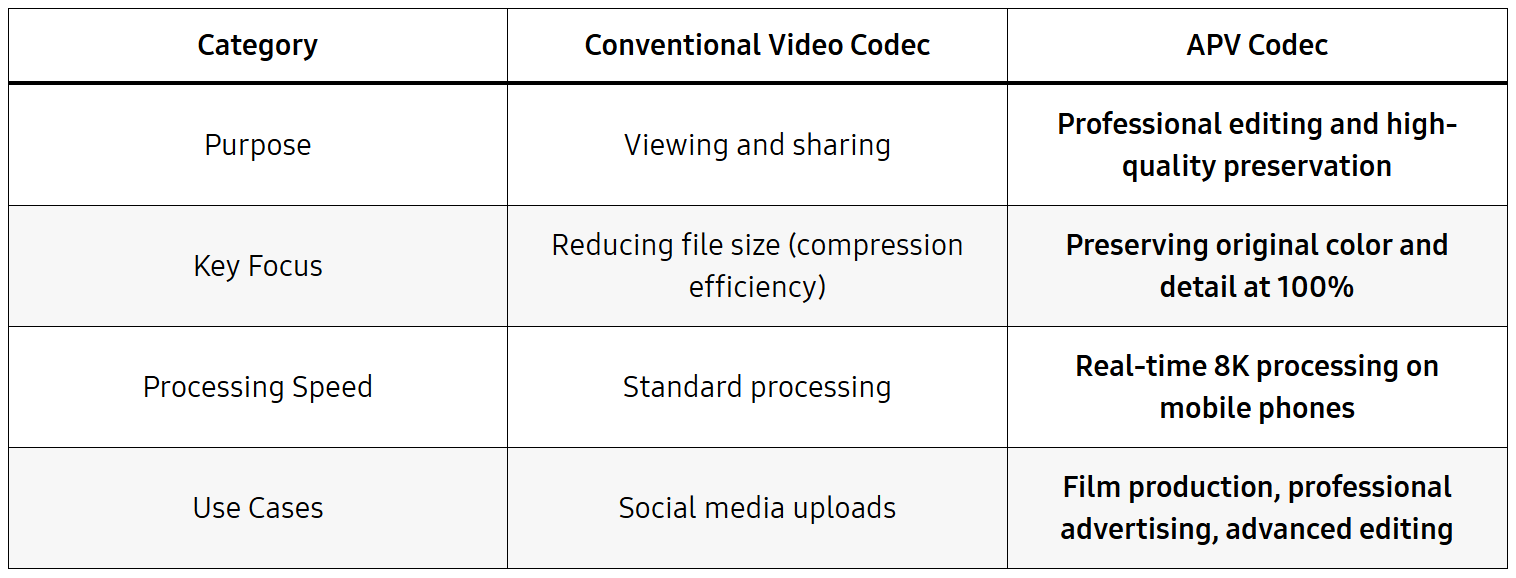
Samsung’s Mobile eXperience (MX) team and its research division teamed up to bring the APV codec to mobile phones. The Galaxy S26 Ultra is the first Android device to support this technology, raising the bar for mobile video creation. The phone is available for purchase on the official US online store and at Best Buy, with a $200 discount.
Samsung is now working to establish APV codecs as a global open standard. “We aim to make professional-grade video production accessible to everyone through APV,” said the company. “Technology delivers its greatest value when it is open, and APV will shape a more creative future for video content”.

Follow us on Google Discover & set us as a preferred source in Google News
Share this Post
___________________________


New Blog Posts
___________________________

Samsung’s Shipbuilding Arm Pushes Floating Data Centers for AI Boom
Samsung is building ships designed to run AI data centers

World Cup 2026 Could Decide Samsung vs Hisense MiniLED Battle: Counterpoint
Samsung leads MiniLED race, but World Cup may flip it, says Counterpoint
Galaxy S25 FE Drops to $449 in Solid 31% Discount Deal
Galaxy S25 FE gets a nice price cut to $449